Treasure of the East
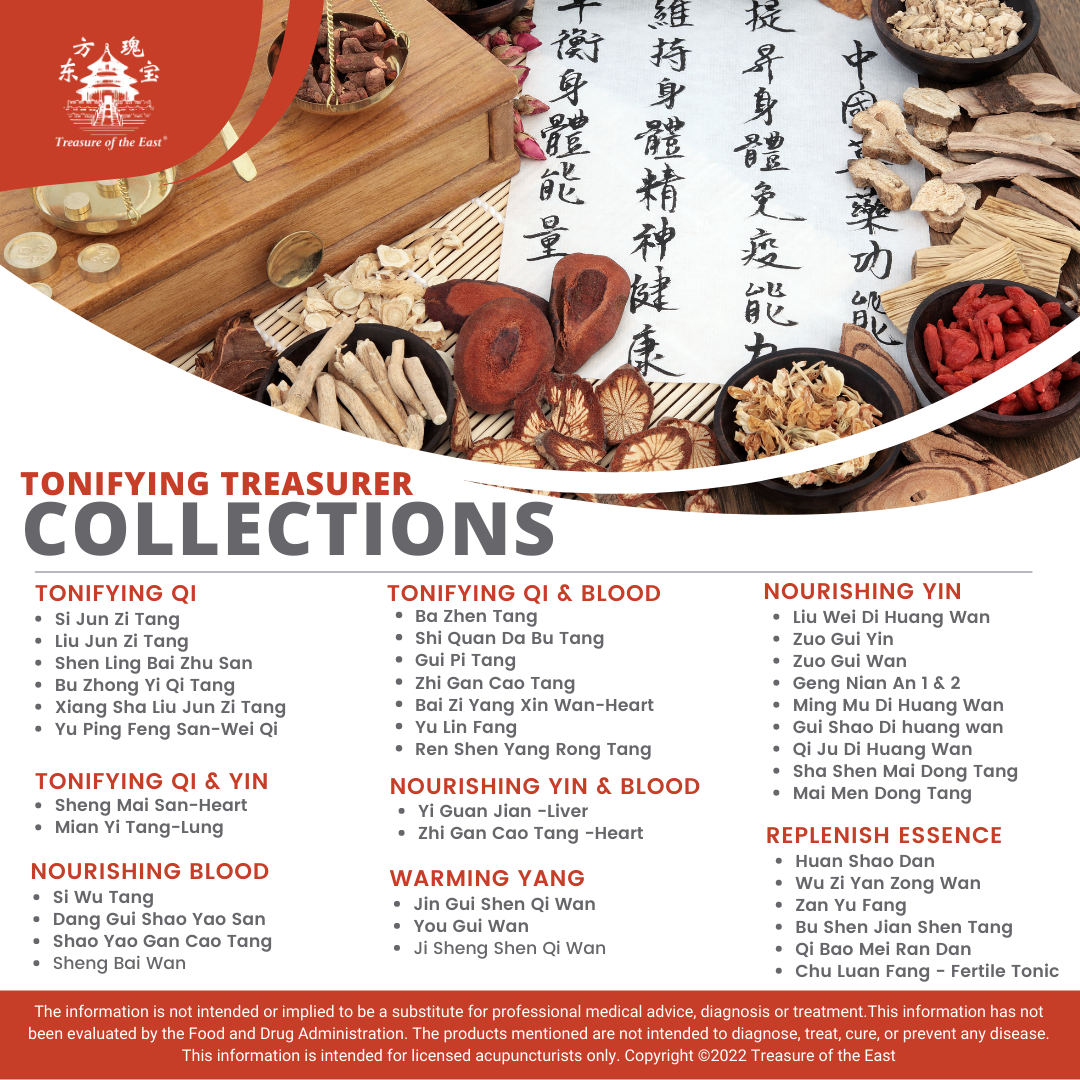
Yu Lin Fang - 毓麟方 - Rehmannia & Cuscuta Combination (Capsules)
Yu Lin Fang - 毓麟方 - Rehmannia & Cuscuta Combination (Capsules)
Couldn't load pickup availability
Not sure this is your formula?
Most people who search a formula name are guessing. Chorus Premium pairs you with a team of Chinese medicine practitioners and a PhD pharmacologist who match the formula to you, check it against your medications, and adjust it as you change.
Full-spectrum, water-based herbal extract; concentrated 5:1 capsules (100 caps./bottle).
Item Number: Y090-c
Chinese Name: 毓麟方, Yu Lin Fang
English Name: Rehmannia & Cuscuta Combination
Formula Principles:
Tonifies kidney Yang, consolidates the Chong and Ren channels, boosts female fertility
Ingredients:
| Dang Shen | Codonopsis Root |
| Bai Zhu | White Atractylodes Rhizome |
| Fu Ling | Poria |
| Bai Shao | White Peony Root |
| Chuan Xiong | Chuanxiong Rhizome |
| Gan Cao (Mi) | Licorice Root (Processed) |
| Dang Gui | Chinese Angelica Root |
| Shu Di Huang | Rehmannia Root (Processed) |
| Tu Si Zi (Yan Zhi) | Dodder Seed |
| Du Zhong (Yan Zhi) | Eucommia Bark (Processed) |
| Lu Jiao Shuang | Degelatinated Antler |
| Hua Jiao | Sichuan Peppercorn |
TCM Pattern:
Kidney Yang deficiency in female with low fertile vitality manifested as irregular menstruation, weakness in the lower back and knees, light colored tongue with white coating, deep pulse due to kidney deficiency
Also available as Granules.
Classical source
Classical source
Yu Lin Fang follows Yu Lin Zhu, a pill recorded by Zhang Jingyue (Zhang Jiebin) in Jing Yue Quan Shu (The Complete Works of Jingyue), published in 1624 in the late Ming dynasty, in his chapter on women's health. Zhang wrote it for women whose qi and blood were both depleted and whose Kidney was weak, with irregular menstrual cycles, an aching lower back, poor appetite and thinness. He took Ba Zhen Tang, the eight-herb formula that builds qi and blood together, and added dodder seed, eucommia, degelatinated deer antler and Sichuan pepper to warm and steady the Kidney. Yu means to nurture, lin is the qilin, an auspicious creature of Chinese legend, and zhu is a pearl.
The pattern
The pattern
The pattern is qi and blood deficiency with Kidney yang deficiency (qi xue liang xu, shen yang bu zu). In Chinese medicine qi and blood fill the Chong and Ren vessels, which govern the menstrual cycle, and Kidney yang warms the lower body. When both run low, cycles come late or irregularly, with scanty, pale flow. There is tiredness, a pale face, dizziness on standing and little appetite. The lower back and knees ache and feel weak, the lower abdomen feels cool, and warmth brings comfort. The tongue is pale with a thin white coat, and the pulse is deep, thin and weak, especially at the Kidney position. Overwork and cold make it worse. Heavy flow with bright red blood, or stabbing pain with dark clots, points to a different pattern.
How it works in Chinese medicine
How it works in Chinese medicine
The treatment principle is to boost qi, nourish blood, and warm and tonify the Kidney. Prepared rehmannia, Chinese angelica and dodder seed are the chiefs: the first two build blood and essence, and dodder seed tonifies both Kidney yin and yang. Codonopsis and white atractylodes strengthen the Spleen so that qi and blood can be made, and degelatinated deer antler warms Kidney yang. Eucommia strengthens the lower back and knees, white peony nourishes blood, chuanxiong keeps blood moving so the rich tonics do not stagnate, and poria supports digestion. Sichuan pepper warms the lower abdomen, and honey-fried licorice harmonises the formula. The logic is to fill the Chong and Ren vessels with qi and blood and to warm them from the Kidney.
Ingredients
Ingredients
- Dang Shen: Codonopsis root
- Bai Zhu: White atractylodes rhizome
- Fu Ling: Poria
- Bai Shao: White peony root
- Chuan Xiong: Chuanxiong rhizome
- Gan Cao (mi): Licorice root, honey-fried
- Dang Gui: Chinese angelica root
- Shu Di Huang: Rehmannia root, prepared
- Tu Si Zi (yan zhi): Dodder seed, salt-processed
- Du Zhong (yan zhi): Eucommia bark, salt-processed
- Lu Jiao Shuang: Degelatinated deer antler
- Hua Jiao: Sichuan peppercorn
Twelve ingredients: eleven plant ingredients and one animal substance, degelatinated deer antler (Lu Jiao Shuang). It contains honey-fried licorice root. Dodder seed and eucommia bark are processed with salt.
How to use
How to use
The capsules are a 5:1 full-spectrum water extract, 100 capsules per bottle. Follow the label or your practitioner for how much to take.
If you are pregnant, nursing, taking medication or managing a health condition, speak with your practitioner before use. Educational information only; these statements have not been evaluated by the FDA and this product is not intended to diagnose, treat, cure or prevent any disease.
In biomedical terms
In biomedical terms
In TCM terms this is a pattern of emptiness and cold: too little qi and blood to fill the vessels that govern the cycle, and too little Kidney yang to warm them. Research interprets it as nitric oxide signalling under strain in the arteries and in the uterine lining. When blood runs thin, arteries compensate: in studies, iron-deficiency anaemia raised nitric oxide signalling in resistance arteries, and restoring iron returned it to normal [1]. For deep tiredness with dizziness, a study of 39 people with ME/CFS found markedly lower flow-mediated dilation, a nitric oxide-dependent measure of artery function, than in healthy controls, with weaker responses in the tiniest vessels too [2]. In the uterus, endothelial and inducible nitric oxide synthase are present in the human lining, and nitric oxide is thought to help start and control menstrual bleeding [3].
On the formula side, among its herbs Sichuan pepper lowered Desulfovibrio, a bacterium that makes hydrogen sulfide, and raised Bifidobacterium-like and Lactobacillus-like bacteria [4]; in a second study it prevented a rise in Desulfovibrio under gut inflammation [5]. Eucommia bark polysaccharides raised butyrate-producing bacteria [6], codonopsis polysaccharide raised Ligilactobacillus and Akkermansia along with acetate and butyrate [7], ferulic acid, a main compound of Chinese angelica, raised bacteria that make short-chain fatty acids and lowered endotoxin [8], and paeoniflorin from white peony raised Lactobacillus and Bifidobacterium [9]. Prepared rehmannia polysaccharides raised beneficial bacteria and short-chain fatty acids [10].
Questions and answers
Questions and answers
What is Yu Lin Fang used for in Chinese medicine?
Yu Lin Fang follows Yu Lin Zhu, a classical formula by Zhang Jingyue, and is traditionally used for qi and blood deficiency with Kidney yang deficiency: late or irregular cycles with scanty, pale flow, tiredness, a pale face, poor appetite and a cold, aching lower back. It builds qi and blood and warms the Kidney. A practitioner usually confirms the pattern before recommending it.
What pattern is Yu Lin Fang for?
Qi and blood deficiency with Kidney yang deficiency (qi xue liang xu, shen yang bu zu). Qi and blood are too low to fill the Chong and Ren vessels, and Kidney yang is too weak to warm them. Typical signs are a pale tongue with a thin white coat and a deep, thin, weak pulse. Heavy bright red flow, heat signs or stabbing pain with dark clots point to a different pattern.
How does Yu Lin Fang work?
In Chinese medicine terms it builds blood with prepared rehmannia, Chinese angelica and white peony, strengthens the Spleen with codonopsis and white atractylodes, and warms the Kidney with dodder seed, eucommia and deer antler. In biomedical terms, research links the pattern to nitric oxide signalling in the arteries [1] and in the uterine lining [3]. Among its herbs, Sichuan pepper lowered a hydrogen sulfide-producing bacterium [4], and codonopsis raised butyrate [7].
What is the difference between Yu Lin Fang capsules and granules?
Both are 5:1 full-spectrum water extracts of the same twelve ingredients from the same maker. The granules dissolve in hot water and are drunk as a tea, which makes the amount easy for a practitioner to adjust. The capsules hold the same kind of extract in a portable, tasteless form. Both contain degelatinated deer antler. Follow the label or your practitioner for how much to take.
Who should not take Yu Lin Fang?
If you are pregnant or trying to conceive, check with your practitioner first. Check with a practitioner too if you are breastfeeding or take blood-thinning medication, since Chinese angelica may interact with blood thinners. It contains deer antler, so it does not suit a vegan diet. Traditionally it is not used when there are signs of heat, such as a red tongue or heavy bright red bleeding, or during a fever.
How is Yu Lin Fang different from Ba Zhen Tang?
Ba Zhen Tang is the eight-herb formula that builds qi and blood together. Yu Lin Fang keeps that base and adds dodder seed, eucommia, degelatinated deer antler and Sichuan pepper, which warm and steady the Kidney. Practitioners turn to it when qi and blood deficiency comes with a cold, aching lower back and cycles that run late, rather than tiredness and pallor alone.
References
References
- Dunaway LS et al. (2026). Arterial iron regulates vasodilation during anemia via endothelial holo-α-globin. Blood. PubMed
- Sandvik MK et al. (2023). Endothelial dysfunction in ME/CFS patients. PLoS One. PubMed
- Cameron IT et al. (1998). Nitric oxide in the endometrium. Hum Reprod Update. PubMed
- Xia Y et al. (2023). The effect of Sichuan pepper on gut microbiota in mice fed a high-sucrose and low-dietary fibre diet. Appl Microbiol Biotechnol. PubMed
- Miyashita A et al. (2024). Effects of Sichuan pepper (huājiāo) powder on disease activity and caecal microbiota of dextran sodium sulphate-induced inflammatory bowel disease mouse model. Mol Biol Rep. PubMed
- Zhao Y et al. (2026). Reshaping the gut microbiota: A novel oppinion of Eucommiae cortex polysaccharide alleviate learning and memory impairments in Alzheimer's disease. J Adv Res. PubMed
- Zhou J et al. (2025). Codonopsis pilosula polysaccharide alleviates ulcerative colitis by modulating gut microbiota and SCFA/GPR/NLRP3 pathway. J Ethnopharmacol. PubMed
- Tian B et al. (2022). Ferulic acid improves intestinal barrier function through altering gut microbiota composition in high-fat diet-induced mice. Eur J Nutr. PubMed
- Xia M et al. (2025). Paeoniflorin improves atherosclerosis by regulating the gut microbiota and fecal metabolites. mSystems. PubMed
- Zhang W et al. (2025). Effects of Rehmanniae Radix Praeparata polysaccharides on LPS-induced immune activation in mice based on gut microbiota, metabolomics and transcriptomics. Int J Biol Macromol. PubMed
Share