Treasure of the East
Xiao Feng San - 消风散 - Wind-Reducing Formula (Granules)
Xiao Feng San - 消风散 - Wind-Reducing Formula (Granules)
Couldn't load pickup availability
Not sure this is your formula?
Most people who search a formula name are guessing. Chorus Premium pairs you with a team of Chinese medicine practitioners and a PhD pharmacologist who match the formula to you, check it against your medications, and adjust it as you change.
Item Number: X067
Chinese Name: 消风散, Xiao Feng San
English Name: Wind-Reducing Formula
Formula Principles: Scatters Wind and eliminates Dampness, clears Heat and nourishes the blood, cools the blood, nourishes the blood, relieves itch
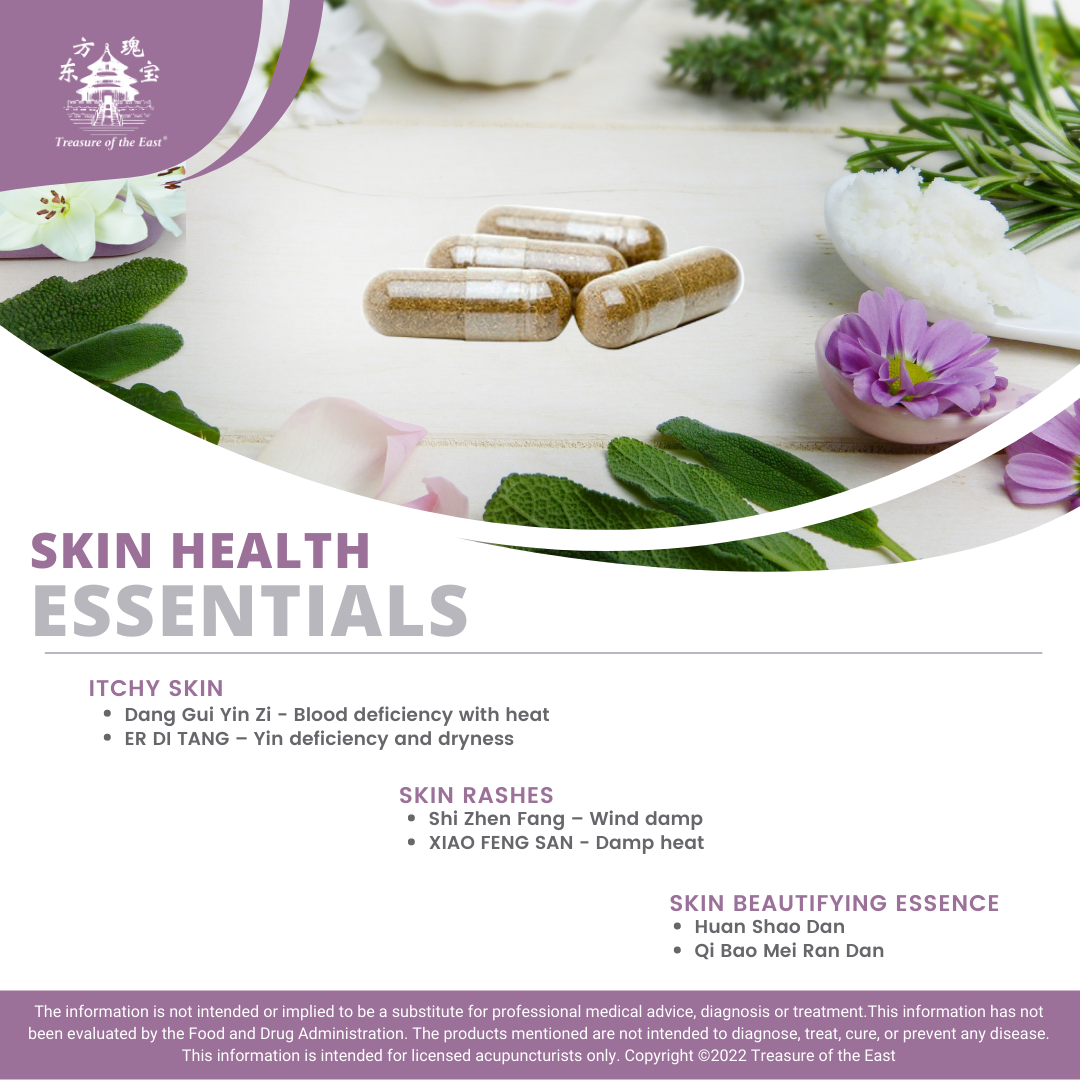
TCM Pattern: Damp-Heat injures the spleen, skin rashes due to Wind-Damp
Potency: Full-spectrum, water-based herbal extract; concentrated 5:1 granules.
Available in: Granules (100g/bottle)
Allergen Information: Contains Wheat & Gluten
What is Xiao Feng San?
Xiao Feng San, also known as Wind-Reducing Formula, is a classical formula best known for its ability to relieve itch.
What are the benefits of Xiao Feng San?
Xiao Feng San is traditionally used in Chinese medicine to expel wind, clear heat and dispel dampness. Concurrently, this formula nourishes the blood.
Those suffering from early stages of a poison oak rash, eczema flare-ups or other skin conditions involving itching, rash, red skin, lesions, and skin discharge from scratching, may benefit from this formula.
What is the dosage and method for taking Xiao Feng San?
The generally recommended dosage of Xiao Feng San in capsule form is four capsules, two to three times daily; or as loose granules, 4.5 g mixed with hot water, 2-3 times per day. However, always follow your healthcare provider's instructions, as the dosage can vary based on your condition and response to treatment.
Please see What's the Recommended Dosage for Granule Herbs? for more information.
When can I expect to see results?
Xiao Feng San typically starts to take effect within days. However, like all treatments, its efficacy can vary from person to person.
Does Xiao Feng San have any side effects?
While Xiao Feng San is generally considered safe for most people, it can cause side effects in some individuals. Women who are pregnant, nursing, or postpartum as well as people with liver disease, should avoid or use Xiao Feng San with caution.
As with any Chinese herb, we recommend consulting with a qualified practitioner of traditional Chinese medicine (TCM) about Xiao Feng San before any course of treatment is started.
Where to buy Xiao Feng San
For practitioners, Treasure of the East offers full-spectrum Xiao Feng San granules (100g/bottle).
If you’re a consumer looking to purchase Xiao Feng San, look for suppliers who provide clear information about the product's origin, purity, and testing procedures to ensure you're getting a high-quality product. Please read Where to Buy Chinese Herbs Safely for more tips on how to source herbs safely.
Xiao Feng San from Treasure of the East is:
✔️ ISO Lab Tested & GMP Certified
✔️ Bio-Authentic with Full Traceability
✔️ Sustainably Sourced from Dao Di Farms
Ingredients (2023 Formulation):
| Cang Zhu (Fu Chao) | Atractylodes Rhizome (Processed)* |
| Chan Tui | Cicada Slough |
| Dang Gui | Chinese Angelica Root |
| Fang Feng | Saposhnikovia Root |
| Gan Cao | Licorice Root |
| Jing Jie | Schizonepeta Herb |
| Ku Shen | Sophora Root |
| Niu Bang Zi (Chao) | Burdock Seed (Processed) |
| Sheng Di Huang | Rehmannia |
| Shi Gao | Gypsum |
| Zhi Mu | Anemarrhena Rhizome |
| Zhu Ye (Dan) | Lophatherum Herb |
Ingredients (Updated Formulation):
| Cang Zhu (Fu Chao) |
Atractylodes Rhizome (Processed)* |
| Chan Tui | Cicada Slough |
| Dang Gui | Chinese Angelica Root |
| Fang Feng | Saposhnikovia Root |
| Gan Cao | Licorice Root |
| Huo Ma Ren | Seed |
| Jing Jie | Schizonepeta Herb |
| Ku Shen | Sophora Root |
| Niu Bang Zi (Chao) | Burdock Seed (Processed) |
| Sheng Di Huang | Rehmannia |
| Shi Gao | Gypsum |
| Xiao Tong Cao | Stachyurus Pith |
| Zhi Mu | Anemarrhena Rhizome |
Allergen: Processed with Wheat
Ingredients provided for reference. Bottles containing 2023 Formulation will be fulfilled until they are sold out - to verify which formulation is currently being shipped, contact us through chat or at herbs@treasureoftheeast.com
Classical source
Classical source
Xiao Feng San comes from Wai Ke Zheng Zong (True Lineage of External Medicine), the text on surgery and skin disorders completed by Chen Shigong in 1617, in the Ming dynasty. Chen wrote it for wind and damp that seep into the blood vessels and break out as sores and rashes that will not stop itching, and for itchy wheals in adults and children that come and go across the body. Xiao means to disperse and feng is wind: the formula clears the wind that, in Chinese medicine, lies behind every itch. Several older formulas share the name; this is the one used for the skin.
The pattern
The pattern
The pattern is wind-heat, or wind-damp-heat, lodged in the skin with the blood involved. Wind brings the itch and makes it move; heat makes the skin red, hot and burning; damp makes it weep or blister. Because the pathogen has reached the blood, rashes are bright, raised and slow to settle. Wheals or patches flare fast, itch fiercely and worsen with heat, hot showers, alcohol or spicy food, and there may be thirst. The tongue is red, often at the tip, with a thin yellow or slightly greasy coat; the pulse is floating and rapid, or slippery. In Chorus practice it is kept for clearly hot flares. Pale wheals brought on by cold, chilliness, tiredness, a pale tongue or a weak pulse point to a cold or deficient pattern, where it does not fit.
How it works in Chinese medicine
How it works in Chinese medicine
The treatment principle is to disperse wind, clear heat, drain damp and nourish the blood. Schizonepeta, saposhnikovia, burdock seed and cicada slough are the chiefs: they open the surface and send the wind out, which quiets the itch. Atractylodes and sophora root dry damp, and stachyurus pith drains damp-heat through the urine. Gypsum and anemarrhena clear heat. Chinese angelica, rehmannia and hemp seed nourish and cool the blood and moisten the skin, following the classical saying that to treat wind, first treat the blood, for when blood moves well, wind settles by itself. Licorice harmonises. Taken as a whole the formula is cooling, which is why it is matched to hot presentations and used for flares.
Ingredients
Ingredients
- Cang Zhu (fu chao): Atractylodes rhizome, processed
- Chan Tui: Cicada slough
- Dang Gui: Chinese angelica root
- Fang Feng: Saposhnikovia root (siler)
- Gan Cao: Licorice root
- Huo Ma Ren: Hemp seed
- Jing Jie: Schizonepeta herb
- Ku Shen: Sophora root
- Niu Bang Zi (chao): Burdock seed, processed
- Sheng Di Huang: Rehmannia root (raw)
- Shi Gao: Gypsum
- Xiao Tong Cao: Stachyurus pith
- Zhi Mu: Anemarrhena rhizome
Thirteen ingredients: eleven from plants, one animal substance (cicada slough, the shed skin of the cicada) and one mineral (gypsum). It contains hemp seed. The Treasure of the East label states the product contains wheat and gluten, so it is not suitable for anyone with celiac disease.
How to use
How to use
The granules are a 5:1 full-spectrum water extract, 100 g per bottle, mixed with hot water and drunk as a tea. Follow the label or your practitioner for how much to take.
If you are pregnant, nursing, taking medication or managing a health condition, speak with your practitioner before use. Educational information only; these statements have not been evaluated by the FDA and this product is not intended to diagnose, treat, cure or prevent any disease.
In biomedical terms
In biomedical terms
In TCM terms this is heat and wind trapped in the skin, with the blood stirred up. Research interprets the red, hot, itching wheal as a local excess of nitric oxide. In acute urticaria, skin cells inside the wheal made the inducible form of nitric oxide synthase together with the inflammatory signals TNF-alpha and IL-6, while unaffected skin from the same people did not [1]. For the damp, weeping side of the pattern: people with atopic dermatitis exhaled about four times more nitric oxide than healthy people, and levels tracked the number of positive allergy skin tests [2]. Research adds carbon monoxide as the brake: blood levels of heme oxygenase-1, the enzyme that makes it, rose with the severity of atopic dermatitis, and in studies boosting the enzyme prevented dermatitis-like lesions [3].
On the formula side, Xiao Feng San in studies reduced ear swelling and the build-up of inflammatory cells in allergen-driven dermatitis, and tended to rebalance the allergic signal IL-4 against interferon-gamma [4]. It reduced oxygen free radicals made by neutrophils, a type of white blood cell, and slowed their movement [5]. A study using a modified version found it reduced scratching and damped itch signalling (NR2B) in the spinal cord [6]. Among its herbs, matrine from sophora root corrected stress-related shifts in gut bacteria and restored gut permeability [7], arctigenin from burdock seed raised bacteria that make short-chain fatty acids and lowered endotoxin [8], and rehmannia polysaccharide kept gut diversity and raised short-chain fatty acids [9].
Clinical research
Clinical research
In a double-blind, placebo-controlled trial of 71 people with severe atopic dermatitis that had resisted usual treatment, eight weeks of Xiao Feng San reduced the total lesion score by about 80%, against about 14% on placebo. Itch and sleep scores also improved, and most differences held four weeks after treatment ended [10]. A meta-analysis of 11 randomised trials in 1,076 people with chronic urticaria found that modified versions of Xiao Feng San gave higher overall response rates and lower recurrence than antihistamines [11]. In Taiwan's national prescription records, it was the formula most often prescribed for urticaria, mainly for the wind-heat pattern [12].
Questions and answers
Questions and answers
What is Xiao Feng San used for in Chinese medicine?
Xiao Feng San is a classical formula traditionally used for wind-heat or wind-damp-heat in the skin: red, hot, intensely itchy wheals or patches that flare fast, sometimes weeping, and worse with heat. It disperses wind, clears heat, drains damp and cools the blood. At Chorus it is reserved for clearly hot flares, used short term, and a practitioner confirms the pattern first.
What pattern is Xiao Feng San for?
Wind-heat or wind-damp-heat lodged in the skin, with the blood involved, shown by a red tongue tip, a thin yellow coat and a floating, rapid pulse. Research interprets the hot, red wheal as a local excess of nitric oxide, with inducible nitric oxide synthase switched on inside the wheal [1]. It does not fit pale wheals brought on by cold, or a tired, chilly, pale person.
How does Xiao Feng San work?
In Chinese medicine terms, schizonepeta, saposhnikovia, burdock seed and cicada slough send wind out of the skin, sophora root and atractylodes dry damp, gypsum and anemarrhena clear heat, and angelica and rehmannia nourish the blood. In biomedical terms, it reduced dermatitis and rebalanced IL-4 against interferon-gamma in studies [4], and reduced neutrophil free radicals [5]. Its herbs raised bacteria that make short-chain fatty acids [8].
What form does Xiao Feng San come in?
At Chorus it comes as granules: a 5:1 full-spectrum water extract of thirteen ingredients, dissolved in hot water and drunk as a tea, which lets a practitioner adjust the amount for a flare. It is bitter, as cooling formulas often are. The label states it contains wheat and gluten, so it is not suitable for anyone with celiac disease. Follow the label or your practitioner for how much to take.
Who should not take Xiao Feng San?
It is a cooling formula, so traditionally it is not used for pale wheals brought on by cold, or in people who feel cold, are worn out, have loose stools or a pale tongue and weak pulse. It is not suitable for anyone with celiac disease. Check with a practitioner first if you are pregnant or breastfeeding or take blood-thinning or other prescription medication.
How long does Xiao Feng San take to work?
In Chinese medicine it is a formula for flares, so practitioners judge it over days to a few weeks, watching for less heat, redness and itch, then step down to a formula for the underlying pattern. Long courses of strongly cooling herbs can weaken digestion. If a flare is not cooling, it is worth asking whether the pattern was the right match.
References
References
- Bécherel PA et al. (1997). Inducible nitric oxide synthase and proinflammatory cytokine expression by human keratinocytes during acute urticaria. Mol Med. PubMed
- Galiniak S et al. (2022). Fractional Exhaled Nitric Oxide in Teenagers and Adults with Atopic Dermatitis. Adv Respir Med. PubMed
- Kirino M et al. (2008). Heme oxygenase 1 attenuates the development of atopic dermatitis-like lesions in mice: implications for human disease. J Allergy Clin Immunol. PubMed
- Gao XK et al. (2005). Kampo Medicines for Mite Antigen-Induced Allergic Dermatitis in NC/Nga Mice. Evid Based Complement Alternat Med. PubMed
- Akamatsu H et al. (1998). Inhibitory effect of shofu-san, a Japanese kampo medicine, on neutrophil functions in vitro. Am J Chin Med. PubMed
- Wang Q et al. (2026). Xiaofeng Granules alleviate intrathecal morphine-induced pruritus via inhibiting the NR2B/PKC/CAMK II signaling pathway. J Anesth. PubMed
- Zhang M et al. (2023). Matrine alleviates depressive-like behaviors via modulating microbiota-gut-brain axis in CUMS-induced mice. J Transl Med. PubMed
- Wang N et al. (2024). Arctigenin ameliorates high-fat diet-induced metabolic disorders by reshaping gut microbiota and modulating GPR/HDAC3 and TLR4/NF-κB pathways. Phytomedicine. PubMed
- Lv H et al. (2023). Rehmannia glutinosa polysaccharides attenuates colitis via reshaping gut microbiota and short-chain fatty acid production. J Sci Food Agric. PubMed
- Cheng HM et al. (2011). The efficacy and safety of a Chinese herbal product (Xiao-Feng-San) for the treatment of refractory atopic dermatitis: a randomized, double-blind, placebo-controlled trial. Int Arch Allergy Immunol. PubMed
- Bi C et al. (2024). Efficacy and safety of Xiaofeng powder in the treatment of chronic urticaria: A systematic review and meta-analysis. Medicine (Baltimore). PubMed
- Chien PS et al. (2013). Frequency and pattern of Chinese herbal medicine prescriptions for urticaria in Taiwan during 2009: analysis of the national health insurance database. BMC Complement Altern Med. PubMed
Share