Treasure of the East
Si Ni San - 四逆散 - Frigid Extremities Formula (Capsules)
Si Ni San - 四逆散 - Frigid Extremities Formula (Capsules)
Couldn't load pickup availability
Not sure this is your formula?
Most people who search a formula name are guessing. Chorus Premium pairs you with a team of Chinese medicine practitioners and a PhD pharmacologist who match the formula to you, check it against your medications, and adjust it as you change.
Full-spectrum, water-based herbal extract; concentrated 5:1 capsules (100 caps./bottle).
Chinese Name: 四逆散, Si Ni San
English Name: Frigid Extremities Formula
Item Number: S165-c
Formula Principles:
Moves Qi, resolves the constraint, soothes the liver, and rectifies the spleen, releases the exterior, eliminates Heat in the interior.
Ingredients:
| Chai Hu | Bupleurum Root |
| Bai Shao | White Peony Root |
| Zhi Shi (Fu Chao) |
Immature Bitter Orange (Processed)* |
| Gan Cao (Mi) | Licorice Root (Processed) |
Allergen: Processed with Wheat *
TCM Pattern:
Counterflow cold of the four limbs in a Shao Yin pattern, liver, spleen constraint and stagnation, Jue liver and spleen disharmony, supports menstrual and metal health against disharmony due to liver Qi stagnation
Also available as Granules.
Classical source
Classical source
Si Ni San comes from the Shang Han Lun (Discussion of Cold Damage), written by Zhang Zhongjing at the end of the Eastern Han dynasty, around 200 to 220 CE. It appears in the shaoyin chapter, at line 318, for cold hands and feet that may come with cough, palpitations, difficult urination, abdominal pain or diarrhoea with heaviness. Later commentators interpret these cold limbs as yang qi held inside by constraint, not true yang deficiency. Si means four and ni means counterflow: warmth fails to reach the four limbs. San means powder. Many later Liver formulas, including Xiao Yao San and Chai Hu Shu Gan San, are built on it.
The pattern
The pattern
The pattern is yang qi constrained in the interior, usually through Liver qi constraint. In Chinese medicine warmth reaches the hands and feet only when qi flows freely out from the centre. When tension holds qi in the chest and abdomen, the trunk stays warm while the fingers and toes turn cold, often worse under stress. There may be tightness under the ribs, abdominal pain or cramping, belching, and bowels that tighten or loosen with mood. People often feel wound up, with tight shoulders and a clenched jaw. The tongue is usually normal or slightly red with a thin coat; the pulse is wiry. Warming the hands helps little; relaxing helps more. Cold through the whole body with exhaustion, a pale swollen tongue and a deep, faint pulse points to true yang deficiency instead.
How it works in Chinese medicine
How it works in Chinese medicine
The treatment principle is to release constraint so that yang qi can reach the limbs, while soothing the Liver and harmonising the Spleen. Bupleurum is the chief: it lifts and spreads, opening the way for held-in yang to move outward. White peony is the deputy: it nourishes blood and softens the Liver, so the spreading does not over-dry. Immature bitter orange is the assistant: it moves qi downward and breaks up stagnation in the middle, balancing bupleurum's upward lift. Honey-fried licorice is the envoy: it harmonises, and with peony relaxes spasm and eases abdominal pain. Four herbs work as two pairs, one raising and one lowering, one spreading and one softening.
Ingredients
Ingredients
- Chai Hu: Bupleurum root
- Bai Shao: White peony root
- Zhi Shi (fu chao): Immature bitter orange, bran-fried
- Gan Cao (mi): Licorice root, honey-fried
Four plant ingredients, with no animal or mineral substances. It contains honey-fried licorice root. Honey is used in processing the licorice and wheat bran in frying the immature bitter orange. The Treasure of the East labels state the product is processed with wheat, so it is not suitable for anyone with celiac disease.
How to use
How to use
The capsules hold a full-spectrum, water-based 5:1 extract, 100 capsules per bottle, and are swallowed with water. Follow the label or your practitioner for how much to take.
If you are pregnant, nursing, taking medication or managing a health condition, speak with your practitioner before use. Educational information only; these statements have not been evaluated by the FDA and this product is not intended to diagnose, treat, cure or prevent any disease.
In biomedical terms
In biomedical terms
In TCM terms the warmth is present but held in the centre, so the limbs go cold when tension rises. Research interprets the pattern mainly through nitric oxide as a brake on the stress response. In the brainstem, nitric oxide in the nucleus tractus solitarius restrains sympathetic nerve output: in studies, blocking it there raised arterial pressure and sympathetic nerve activity [1], and the nerve form of the enzyme was needed to relay the baroreflex signals that steady circulation [2]. Research interprets the cold, tense hands of this pattern as that brake weakening under strain. Deeper in the brain the picture differs: under chronic stress the nerve form of nitric oxide synthase rose in the hippocampus within four days and stayed high, suppressing new nerve cells and producing depression-like behaviour [3]. In the airway, students breathed out less nitric oxide during exam stress, and those with more depressed mood at the start had larger falls [4].
On the formula side, in studies of chronic stress, Si Ni San raised gut diversity, Lactobacillaceae, Ruminococcaceae and Oscillospiraceae, raised butyrate and propionate, and raised tryptophan and serotonin in the gut and hippocampus [5]. In studies of colitis it favoured Akkermansia by raising the protective mucus protein MUC2, and its benefit depended on the gut flora [6]. In studies of liver scarring it restored gut diversity and bile acid balance, and needed both the flora and the bile acid receptor FXR to protect the liver [7]. In 36 adults with functional constipation, seven days of Si Ni San shortened transit through the left colon and rectum [8].
Clinical research
Clinical research
In a randomised, double-blind, placebo-controlled trial of 36 people with major depressive disorder, four weeks of Si Ni San granules added to paroxetine improved markers of circadian rhythm, including an earlier evening melatonin rise, more than placebo with paroxetine, and depression scores showed a significant group-by-time effect [9]. In 36 adults with functional constipation, a week of Si Ni San shortened colonic transit time compared with their own starting values [8]. A meta-analysis of seven randomised trials in 548 people with post-stroke depression found that a modified version of Si Ni San gave a better response rate than fluoxetine [10].
Questions and answers
Questions and answers
What is Si Ni San used for in Chinese medicine?
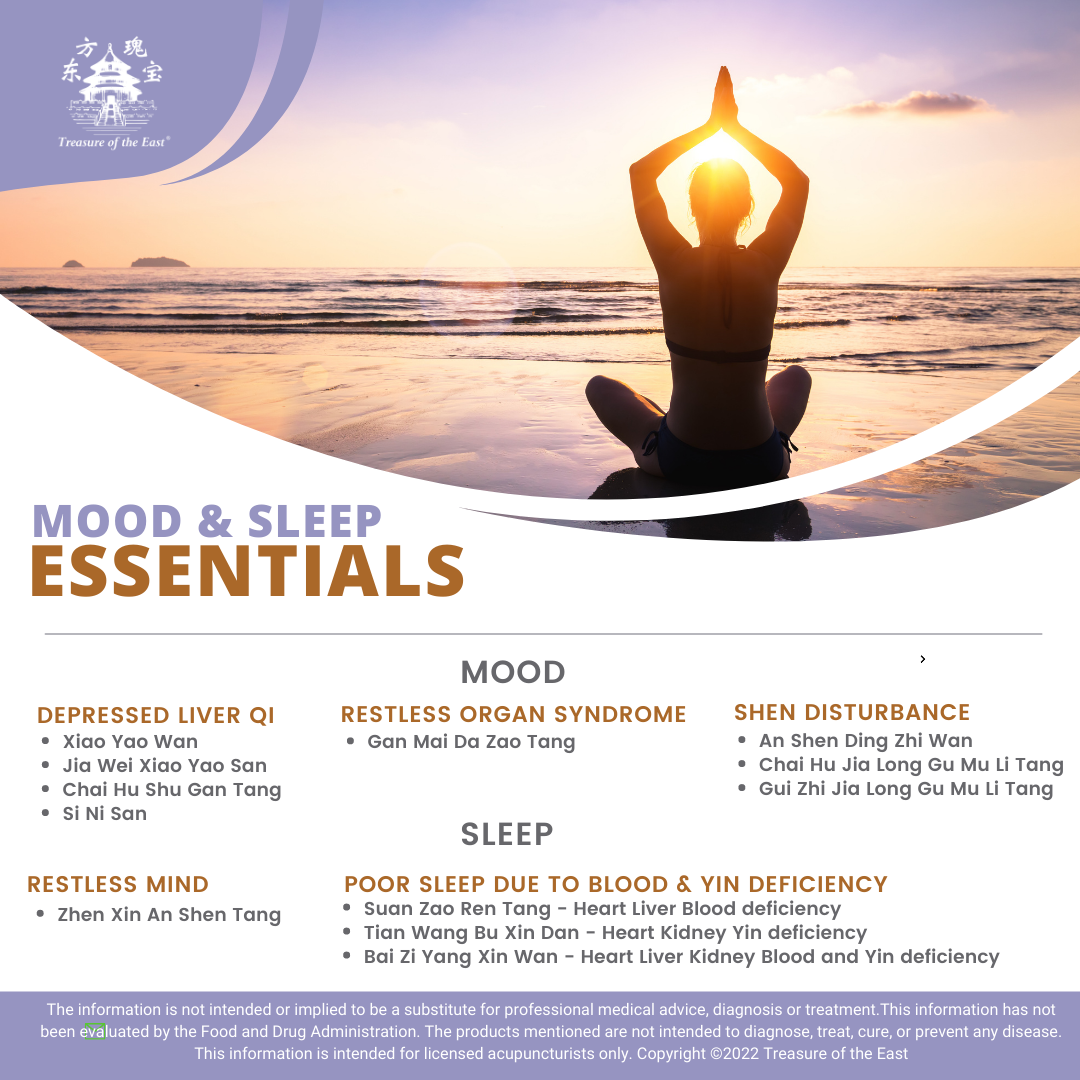
Si Ni San is a classical formula from the Shang Han Lun, traditionally used when tension traps warmth in the centre of the body: cold hands and feet on an otherwise warm body, tightness under the ribs, abdominal cramping, and a wound-up feeling that worsens with stress. It releases the constraint so that warmth can reach the limbs, and softens the Liver. A practitioner usually confirms the pattern first.
What pattern is Si Ni San for?
Yang qi constrained in the interior, usually through Liver qi constraint (yang yu, gan pi bu he). The cold hands are not from too little warmth but from warmth that cannot get out. The pulse is wiry and the tongue fairly normal. If the cold covers the whole body, with exhaustion, a pale swollen tongue and a faint pulse, true yang deficiency is more likely, and warming formulas are used instead.
How does Si Ni San work?
In Chinese medicine terms, bupleurum lifts and spreads, immature bitter orange moves qi down, white peony softens the Liver, and licorice relaxes spasm. In biomedical terms, research links this pattern to nitric oxide in the brainstem, which restrains the nervous system's stress output [1]. In studies, Si Ni San raised gut diversity and butyrate and raised serotonin in the gut and brain [5], and favoured the mucus-loving bacterium Akkermansia [6].
What is the difference between Si Ni San capsules and granules?
The Treasure of the East granules and capsules are both 5:1 full-spectrum water extracts of the same four herbs. The granules dissolve in hot water as a tea, which makes the amount easy to adjust; the capsules are portable and tasteless. Both labels state the product is processed with wheat, so neither suits anyone with celiac disease. Follow the label or your practitioner for how much to take.
Who should not take Si Ni San?
Check with a practitioner first if you are pregnant or breastfeeding or take any medication. The Treasure of the East versions are not suitable for anyone with celiac disease, since the labels state they are processed with wheat. Traditionally the formula is not used for cold limbs that come from true yang deficiency, with exhaustion and cold through the whole body, and it is used with care when yin or blood is depleted.
How long does Si Ni San take to work?
Constraint is a pattern of blocked movement rather than depletion, so in Chinese medicine it often shifts within days to a few weeks, and practitioners watch the hands, the abdomen and the pulse. In the placebo-controlled trial, changes were measured after four weeks [9]. If the hands stay cold and tension is unchanged after several weeks, it is worth asking whether the pattern was the right match.
References
References
- Harada S et al. (1993). Inhibition of nitric oxide formation in the nucleus tractus solitarius increases renal sympathetic nerve activity in rabbits. Circ Res. PubMed
- Talman WT et al. (2004). Transmission of arterial baroreflex signals depends on neuronal nitric oxide synthase. Hypertension. PubMed
- Zhou QG et al. (2007). Neuronal nitric oxide synthase contributes to chronic stress-induced depression by suppressing hippocampal neurogenesis. J Neurochem. PubMed
- Ritz T et al. (2015). Exhaled Nitric Oxide Decreases during Academic Examination Stress in Asthma. Ann Am Thorac Soc. PubMed
- Zhu L et al. (2025). Sini San ameliorates symptoms of depression by modulating gut microbiota structure, Tryptophan metabolism, and short-chain fatty acid levels. BMC Complement Med Ther. PubMed
- Cai Y et al. (2023). Si-Ni-San improves experimental colitis by favoring Akkermensia colonization. J Ethnopharmacol. PubMed
- Zhu F et al. (2025). Regulatory effects of Sini-San on bile acid homeostasis in the enterohepatic circulation of mice with liver fibrosis. Chin Med. PubMed
- Jin ZH et al. (2006). [Clinical study on colonic transmission time and the effect of sini powder on it in functional constipation patients]. Zhongguo Zhong Xi Yi Jie He Za Zhi. PubMed
- He X et al. (2022). Sini powder with paroxetine ameliorates major depressive disorder by modulating circadian rhythm: A randomized, double-blind, placebo-controlled trial. J Pineal Res. PubMed
- Cai L et al. (2021). Efficacy and safety of modified Sini San for treating poststroke depression: A meta-analysis of randomized controlled trials. Explore (NY). PubMed
Share