Treasure of the East
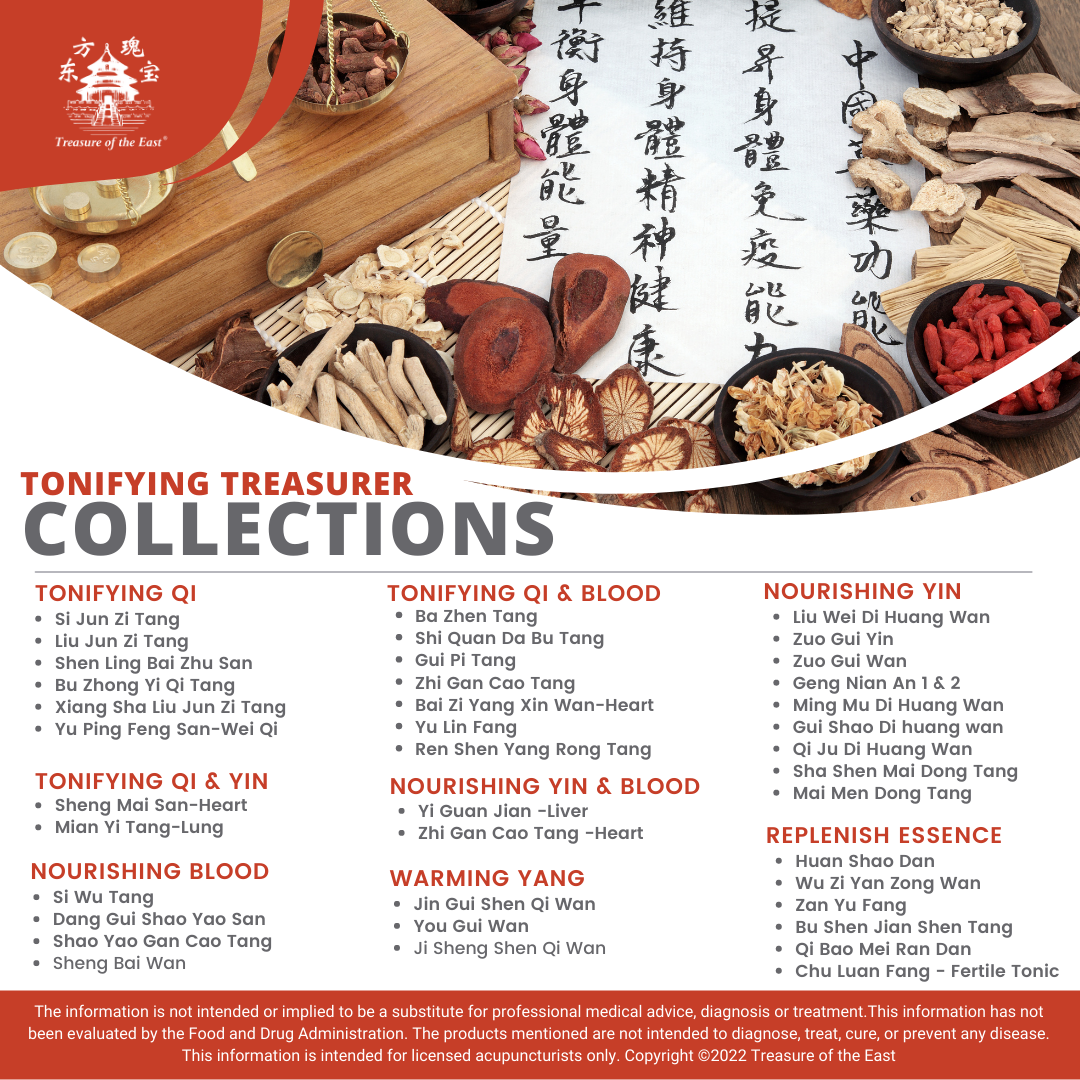
Shao Yao Gan Cao Tang - 芍药甘草汤 - Peony & Licorice Combination (Capsules)
Shao Yao Gan Cao Tang - 芍药甘草汤 - Peony & Licorice Combination (Capsules)
Couldn't load pickup availability
Not sure this is your formula?
Most people who search a formula name are guessing. Chorus Premium pairs you with a team of Chinese medicine practitioners and a PhD pharmacologist who match the formula to you, check it against your medications, and adjust it as you change.
Full-spectrum, water-based herbal extract; concentrated 5:1 capsules (100 caps./bottle).
Item Number: S030-c
Chinese Name: 芍药甘草汤, Shao Yao Gan Cao Tang
English Name: Peony & Licorice Combination
Formula Principles:
Boosts Qi and supplements blood
Ingredients:
| Bai Shao | White Peony Root |
| Gan Cao | Licorice Root |
TCM Pattern:
Qi and blood deficiency, liver and spleen deficiency
Also available as Granules.
Classical source
Classical source
Shao Yao Gan Cao Tang comes from the Shang Han Lun (Discussion of Cold Damage) by Zhang Zhongjing, written at the end of the Eastern Han dynasty, around 200 to 220 CE. It appears at line 29, in a case where the wrong treatment was given to someone already sweating, chilled and short of fluids, leaving the lower legs cramped and unable to straighten. Zhang first restores warmth, then gives this two-herb decoction, and the text records that the legs then straighten. Shao yao is peony and gan cao is licorice; tang means decoction. It is one of the smallest formulas in the classical canon.
The pattern
The pattern
The pattern is Liver blood and yin failing to nourish the sinews. In Chinese medicine the Liver stores blood, and the sinews, meaning the muscles and tendons, depend on that blood and on yin fluids to stay supple. When blood and fluids run low, from sweating, blood loss, overwork or age, the sinews tighten. The result is cramp and spasm: calves that seize at night, toes that curl, a hand that cramps while writing, or gripping pain in the abdomen. Muscles may feel tight and twitchy, sometimes numb. Nails may be brittle and the eyes dry. The tongue is pale or slightly red with little coat; the pulse is thin and wiry. Fatigue, sweating and cold make it worse; rest and warmth help. Cramp with redness, swelling and heat, or heavy, aching limbs, points to a different pattern.
How it works in Chinese medicine
How it works in Chinese medicine
The treatment principle is to nourish blood and yin, soften the Liver and relax the sinews, easing spasm and pain. White peony is the chief: sour and slightly cold, it nourishes Liver blood, holds in yin and softens the Liver. Licorice is the deputy: sweet, it strengthens the middle and relaxes tension. Together they show a principle Chinese medicine calls sour and sweet transforming yin: the sour herb holds fluids in, the sweet herb builds them, and between them new yin forms to moisten the sinews. The pair acts on any muscle that is gripping, whether the calf, the abdomen or the gut wall. Because it is so small, it is often added to other formulas, and the pair sits inside many larger ones, including Si Ni San.
Ingredients
Ingredients
- Bai Shao: White peony root
- Gan Cao: Licorice root
Two plant ingredients, with no animal or mineral substances. It contains licorice root, one of its two herbs.
How to use
How to use
The capsules hold a full-spectrum, water-based 5:1 extract, 100 capsules per bottle, and are swallowed with water. Follow the label or your practitioner for how much to take.
If you are pregnant, nursing, taking medication or managing a health condition, speak with your practitioner before use. Educational information only; these statements have not been evaluated by the FDA and this product is not intended to diagnose, treat, cure or prevent any disease.
In biomedical terms
In biomedical terms
In TCM terms the sinews are underfed: too little blood and fluid reach the muscles, so they grip. Research interprets the pattern through nitric oxide in the smallest vessels of the muscles. Red blood cells act as a sensor here: as oxygen falls, haemoglobin turns nitrite into nitric oxide and widens small vessels, most strongly at half-saturation [1]. When blood is thin the system changes rather than simply weakening: in studies of iron-deficiency anaemia, vessel nitric oxide synthase and nitric oxide output rose as haematocrit fell [2]. Research interprets the cramping, numb limbs of this pattern as nitric oxide signalling that fails to reach the muscle where it is needed.
On the formula side, in studies the decoction and the licorice constituents in it inhibited sustained, cramp-like contractions of skeletal muscle in a dose-dependent way, while peony is credited with easing pain [3], and the decoction did not weaken normal muscle twitches [4]. In studies of a dysfunctional bile-duct sphincter, it restored nitric oxide and the nerve and pacemaker-cell network that relaxes the sphincter [5]. In studies it relieved nerve pain caused by a chemotherapy drug, more than either herb alone [6]. In 20 adults with functional constipation, a few days of the decoction shifted stool bacteria away from Escherichia-Shigella and Enterobacteriaceae toward Roseburia, Ruminococcus and Veillonella, with more short-chain fatty acids [7]. In studies it also lowered LPS-producing Proteobacteria and raised Akkermansia and Butyricicoccus, with less LPS reaching the blood [8], and restored short-chain fatty acids and the bacteria that make them, an effect that depended on an intact gut flora [9].
Clinical research
Clinical research
In a randomised crossover trial of 62 people on maintenance haemodialysis with frequent muscle cramps, four weeks of Shao Yao Gan Cao Tang cut cramp frequency compared with standard care, and improved cramp pain scores and the number of body areas affected [10]. In a trial in people with painful muscle cramps from lumbar spinal stenosis, the formula cut cramp frequency by more than half in 13 of 16 people, compared with 4 of 14 given the muscle relaxant eperisone, usually within three days [11]. In 61 people with cramps during haemodialysis, a single dose of the granules stopped the cramp in 54, in about five minutes on average [12]. A meta-analysis of 15 randomised trials in 1,188 people with postherpetic neuralgia found that adding the formula to conventional treatment improved response rates, pain and sleep scores, with fewer adverse events [13].
Questions and answers
Questions and answers
What is Shao Yao Gan Cao Tang used for in Chinese medicine?
Shao Yao Gan Cao Tang is a two-herb classical formula from the Shang Han Lun, traditionally used when Liver blood and yin fail to nourish the sinews: cramping calves at night, curling toes, twitchy, tight muscles and gripping abdominal pain. White peony nourishes blood and softens the Liver, and licorice relaxes tension. It is often given on its own for cramp, or added to a larger formula. A practitioner usually confirms the pattern first.
What pattern is Shao Yao Gan Cao Tang for?
Liver blood and yin failing to nourish the sinews (jin mai shi yang). The muscles and tendons are underfed by blood and fluid, so they tighten and cramp, often worse at night, after sweating or with fatigue. The tongue tends to be pale or slightly red with little coat and the pulse thin and wiry. Cramp with redness, heat and swelling, or heavy, damp, aching limbs, points to a different pattern.
How does Shao Yao Gan Cao Tang work?
In Chinese medicine terms, sour peony and sweet licorice together build yin, which moistens and relaxes the sinews. In biomedical terms, research links the pattern to nitric oxide that fails to reach the muscles' smallest vessels [1]. In studies, the decoction and its licorice constituents inhibited cramp-like muscle contractions [3] without weakening normal twitches [4], and in 20 adults it raised Roseburia and short-chain fatty acids in the gut [7].
What is the difference between Shao Yao Gan Cao Tang capsules and granules?
Both are 5:1 full-spectrum water extracts of white peony and licorice from Treasure of the East. The granules dissolve in hot water and are drunk as a tea, which makes the amount easy for a practitioner to adjust and suits taking it when a cramp starts. The capsules hold the same kind of extract in a portable, tasteless form. Follow the label or your practitioner for how much to take.
Who should not take Shao Yao Gan Cao Tang?
Check with a practitioner first if you are pregnant or breastfeeding, take any medication, or have heart, kidney or liver disease, so that the formula can be screened against your situation. Traditionally it is not the formula for cramp from damp or heat, with heavy, swollen or red, hot limbs. It is often used for short periods, or as needed, rather than continuously, and reviewed if taken for longer.
How long does Shao Yao Gan Cao Tang take to work?
Classically it is a fast-acting formula: the Shang Han Lun records the legs straightening after it is taken. In studies, a single dose stopped cramps during dialysis in about five minutes on average [12], and in people with spinal stenosis most felt the full effect within three days [11]. For long-standing blood deficiency, practitioners usually pair it with a nourishing formula and judge the result over weeks.
References
References
- Crawford JH et al. (2006). Hypoxia, red blood cells, and nitrite regulate NO-dependent hypoxic vasodilation. Blood. PubMed
- Ni Z et al. (1997). Up-regulation of renal and vascular nitric oxide synthase in iron-deficiency anemia. Kidney Int. PubMed
- Lee KK et al. (2013). Antispasmodic effect of shakuyakukanzoto extract on experimental muscle cramps in vivo: role of the active constituents of Glycyrrhizae radix. J Ethnopharmacol. PubMed
- Kaifuchi N et al. (2015). Effects of shakuyakukanzoto and its absorbed components on twitch contractions induced by physiological Ca2+ release in rat skeletal muscle. J Nat Med. PubMed
- Zhu GY et al. (2021). The Effect of Shaoyao Gancao Decoction on Sphincter of Oddi Dysfunction in Hypercholesterolemic Rabbits via Protecting the Enteric Nervous System-Interstitial Cells of Cajal-Smooth Muscle Cells Network. J Inflamm Res. PubMed
- Hidaka T et al. (2009). Herbal medicine Shakuyaku-kanzo-to reduces paclitaxel-induced painful peripheral neuropathy in mice. Eur J Pain. PubMed
- Zhu L et al. (2025). Shaoyao Gancao decoction alleviates functional constipation by inhibiting Escherichia-Shigella expansion, modulating gut microbiota, and suppressing dysbiosis-induced endocannabinoid production: evidence from a self-controlled pilot study. Front Cell Infect Microbiol. PubMed
- Chang ZP et al. (2021). Shaoyao-Gancao Decoction Ameliorates the Inflammation State in Polycystic Ovary Syndrome Rats via Remodeling Gut Microbiota and Suppressing the TLR4/NF-κB Pathway. Front Pharmacol. PubMed
- Li J et al. (2022). Combining fecal microbiome and metabolomics to reveal the disturbance of gut microbiota in liver injury and the therapeutic mechanism of shaoyao gancao decoction. Front Pharmacol. PubMed
- Li C et al. (2025). Shaoyao-Gancao decoction for the treatment of muscle cramps in maintenance hemodialysis: A prospective randomized crossover controlled trial. J Ethnopharmacol. PubMed
- Takao Y et al. (2015). Shakuyaku-kanzo-to (Shao-Yao-Gan-Cao-Tang) as Treatment of Painful Muscle Cramps in Patients with Lumbar Spinal Stenosis and Its Minimum Effective Dose. Kobe J Med Sci. PubMed
- Hyodo T et al. (2006). Immediate effect of Shakuyaku-kanzo-to on muscle cramp in hemodialysis patients. Nephron Clin Pract. PubMed
- Zhao J et al. (2026). Shaoyao Gancao decoction for neuropathic pain: a systematic review and meta-analysis of postherpetic neuralgia. Am J Transl Res. PubMed
Share