Treasure of the East
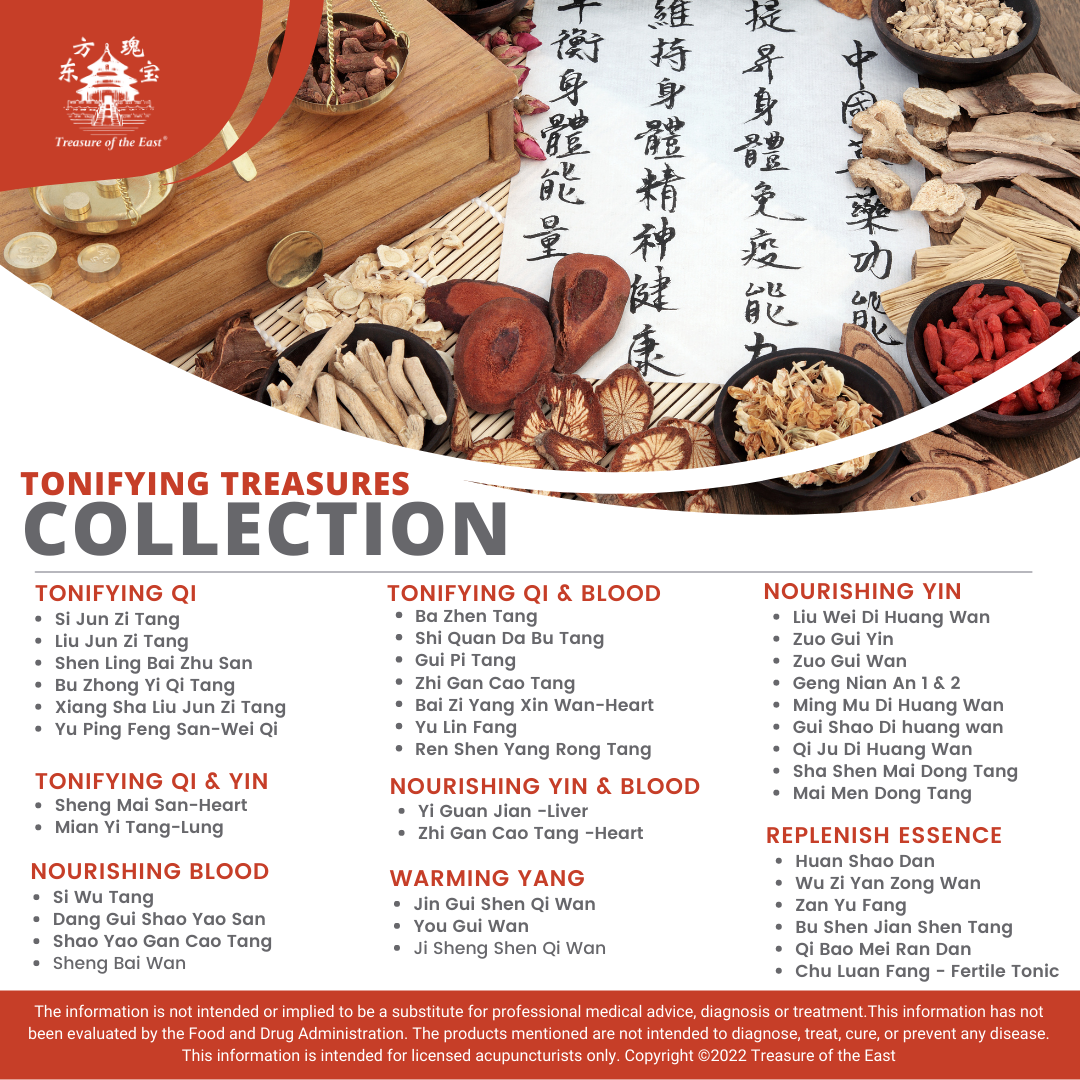
Ming Mu Di Huang Wan - 明目地黄丸 - Rehmannia Vision Formula (Granules)
Ming Mu Di Huang Wan - 明目地黄丸 - Rehmannia Vision Formula (Granules)
Couldn't load pickup availability
Not sure this is your formula?
Most people who search a formula name are guessing. Chorus Premium pairs you with a team of Chinese medicine practitioners and a PhD pharmacologist who match the formula to you, check it against your medications, and adjust it as you change.
Full-spectrum, water-based herbal extract; concentrated 5:1 granules (100g/bottle).
Item Number: M035
Chinese Name: 明目地黄丸, Ming Mu Di Huang Wan
English Name: Rehmannia Vision Formula
This modern formula is designed to address common Western conditions, and was selected for inclusion in our catalogue based on the efficacy of their use in TCM hospitals.*
Formula Principles:
Nourishes the liver, enriches the kidneys, improves vision
Ingredients:
| Shu Di Huang | Rehmannia Root (Processed) |
| Shan Yu Rou | Cornus Fruit (Processed) |
| Mu Dan Pi | Moutan Bark |
| Shan Yao | Dioscorea Rhizome |
| Fu Ling | Poria |
| Ze Xie | Alisma Rhizome |
| Gou Qi Zi | Goji Berry |
| Ju Hua | Chrysanthemum Flower |
| Dang Gui | Chinese Angelica Root |
| Bai Ji Li (Chao) | Tribulus Fruit (Processed) |
| Shi Jue Ming (Duan) | Abalone Shell (Processed) |
| Bai Shao | White Peony Root |
TCM Pattern:
Deficiency of the liver Yin and kidney Yin manifested as dry eyes, blurred vision
Dosage
Mix 4.5 g in hot water and drink as tea, 2-3 daily.
Classical source
Classical source
Ming Mu Di Huang Wan is a later member of the Di Huang Wan family, made in China as a patent pill. It starts from Qi Ju Di Huang Wan, the goji and chrysanthemum version of the six-herb rehmannia pill that the Song children's physician Qian Yi recorded in 1119, and adds four herbs that work on the eyes from two sides: Chinese angelica and white peony to nourish the blood the Liver stores, and tribulus and calcined abalone shell to calm the Liver and settle the wind that rises to the eyes. Ming mu means to brighten the eyes, and di huang names the rehmannia pill at its core.
The pattern
The pattern
The pattern is Liver and Kidney yin deficiency with Liver blood deficiency, in which the undernourished Liver lets wind and yang rise to the eyes. In Chinese medicine the eyes depend on Liver blood to see and on Kidney yin for moisture. When both are low, vision blurs and the eyes dry and tire. What marks this picture is added restlessness at the eyes: tearing in the wind, sensitivity to bright light, a feeling of pressure in the eyes, and dizziness or headache that rises with stress. A pale or sallow complexion, dry skin and light periods show the blood side. The tongue is pale-red with little coat and the pulse thin and wiry. Red, painful eyes with a thick coat point to excess heat instead.
How it works in Chinese medicine
How it works in Chinese medicine
The treatment principle is to nourish Liver and Kidney yin, build Liver blood, calm the Liver and brighten the eyes. The rehmannia base, with prepared rehmannia as chief, fills Kidney yin, and goji berry and chrysanthemum guide that nourishment to the eyes. Chinese angelica and white peony refill Liver blood, the substance the eyes see with, and peony softens the Liver. Tribulus disperses wind from the Liver and eases tearing, and calcined abalone shell, heavy and cool, anchors rising Liver yang and is a classical substance for clearing the vision. The logic works on two levels: fill what is empty below, and settle what has risen above.
Ingredients
Ingredients
- Shu Di Huang: Rehmannia root, processed (prepared)
- Shan Yu Rou: Cornus fruit, processed
- Mu Dan Pi: Moutan bark (tree peony root bark)
- Shan Yao: Dioscorea rhizome (Chinese yam)
- Fu Ling: Poria
- Ze Xie: Alisma rhizome
- Gou Qi Zi: Goji berry (lycium fruit)
- Ju Hua: Chrysanthemum flower
- Dang Gui: Chinese angelica root
- Bai Ji Li (chao): Tribulus fruit, processed
- Shi Jue Ming (duan): Abalone shell, processed (calcined)
- Bai Shao: White peony root
Twelve ingredients: eleven plant herbs and calcined abalone shell, which is a shellfish product. The rehmannia root, cornus fruit and tribulus fruit are processed forms.
How to use
How to use
The granules are a 5:1 full-spectrum, water-based extract, 100 g per bottle. Mix 4.5 g in hot water and drink as a tea, two to three times daily, or as directed by your practitioner.
If you are pregnant, nursing, taking medication or managing a health condition, speak with your practitioner before use. Educational information only; these statements have not been evaluated by the FDA and this product is not intended to diagnose, treat, cure or prevent any disease.
In biomedical terms
In biomedical terms
In TCM terms the eyes are short of both moisture and blood, and the Liver, left unanchored, sends wind and heat upward. Research interprets this as a shortfall of the steady nitric oxide that supplies the eye, with oxidative and inflammatory stress where that supply fails. Nitric oxide sets basal blood flow in the choroid, optic nerve and retina, and helps the eye hold its blood flow steady as pressure changes [1]. Blood itself is part of that supply: red blood cells turn nitrite into nitric oxide as they release oxygen, opening vessels where tissue needs it [2]. Research interprets thin blood, in TCM terms, as less of this local delivery to the eye.
On the formula side, in a trial in older adults recovering from cataract surgery, adding Ming Mu Di Huang raised the antioxidant enzymes glutathione peroxidase, catalase and superoxide dismutase and lowered nitric oxide, IL-6 and TNF-alpha, in measures taken from blood and from the fluid inside the eye [3]. Of its added herbs, polysaccharides from stir-fried tribulus, the form in this product, shifted the gut flora, raised short-chain fatty acids and strengthened the gut barrier more than the raw form [4]. Ferulic acid, a main compound of Chinese angelica, raised short-chain-fatty-acid producers and lowered endotoxin-producing bacteria and blood endotoxin [5], and a white peony extract raised gut microbial diversity and beneficial bacteria [6].
Clinical research
Clinical research
In a randomised controlled trial of 120 older adults after cataract surgery, adding Ming Mu Di Huang to conventional care raised antioxidant enzyme activity and lowered inflammatory signals compared with conventional care alone. The Ming Mu Di Huang group also had better recovery of visual acuity, less clouding of the lens and fewer complications [3]. The study took its measures from both the blood and the fluid of the eye's front chamber.
Questions and answers
Questions and answers
What is Ming Mu Di Huang Wan used for in Chinese medicine?
Ming Mu Di Huang Wan is traditionally used for Liver and Kidney yin and blood deficiency affecting the eyes: blurred, dry or tired vision, tearing in the wind, sensitivity to light and a sense of pressure in the eyes, often with dizziness. It combines the rehmannia yin base with blood tonics and with substances that settle the Liver, so it both feeds the eyes and calms them. A practitioner usually confirms the pattern first.
What pattern is Ming Mu Di Huang Wan for?
Liver and Kidney yin deficiency with Liver blood deficiency, where the unanchored Liver sends wind and yang up to the eyes. The signs combine dryness and blurred vision with restlessness at the eyes: tearing in the wind, light sensitivity and pressure. The tongue is pale-red with little coat and the pulse thin and wiry. Without the tearing, pressure or blood signs, the simpler Qi Ju Di Huang Wan is often enough.
How is Ming Mu Di Huang Wan different from Qi Ju Di Huang Wan?
Both share the six-herb rehmannia base plus goji and chrysanthemum. Ming Mu Di Huang Wan adds four ingredients: Chinese angelica and white peony to build Liver blood, and tribulus and calcined abalone shell to calm the Liver and ease wind at the eyes. In Chinese medicine terms, Qi Ju Di Huang Wan suits dry, tired eyes from yin deficiency alone, while Ming Mu Di Huang Wan suits that picture with thin blood and tearing, light sensitivity or pressure.
How does Ming Mu Di Huang Wan work?
In Chinese medicine terms, the rehmannia base and goji fill yin, angelica and peony build blood, and tribulus and abalone shell settle the Liver, so the eyes are calmed as well as fed. In biomedical terms, research interprets the pattern as too little of the steady nitric oxide that supplies the eye [1]. In a trial after cataract surgery, the formula raised antioxidant enzymes and lowered inflammatory signals in the blood and in the fluid inside the eye [3].
Who should not take Ming Mu Di Huang Wan?
Check with a practitioner first if you are pregnant or breastfeeding, take blood-thinning or other prescription medication, or manage a health condition. The formula contains abalone shell, so it is not suitable for anyone allergic to shellfish. Traditionally it is not used when digestion is weak with loose stools. Sudden eye pain, a red and painful eye, flashes, new floaters or a sudden change in vision need prompt assessment by an eye doctor.
How long does Ming Mu Di Huang Wan take to work?
In Chinese medicine, blood and yin are rebuilt gradually, so practitioners usually judge a formula like this over several weeks rather than days. The tearing and light sensitivity, which come from the rising Liver, may settle before the deeper dryness does. If nothing has shifted after several weeks, it is worth asking whether the pattern was the right match.
References
References
- Schmetterer L et al. (2001). Role of nitric oxide in the control of ocular blood flow. Prog Retin Eye Res. PubMed
- Crawford JH et al. (2006). Hypoxia, red blood cells, and nitrite regulate NO-dependent hypoxic vasodilation. Blood. PubMed
- Tang G (2026). Clinical investigations and mechanistic insights into the antioxidant effects of drugs post-cataract surgery. Pak J Pharm Sci. PubMed
- Wang S et al. (2026). Ultrasound-assisted extraction optimization of Fructus Tribuli polysaccharides: How stir-frying processing alters structures and enhances antihypertensive efficacy. Ultrason Sonochem. PubMed
- Tian B et al. (2022). Ferulic acid improves intestinal barrier function through altering gut microbiota composition in high-fat diet-induced mice. Eur J Nutr. PubMed
- Yan BF et al. (2022). Aqueous extract of Paeoniae Radix Alba (Paeonia lactiflora Pall.) ameliorates DSS-induced colitis in mice by tunning the intestinal physical barrier, immune responses, and microbiota. J Ethnopharmacol. PubMed
Share