Treasure of the East
Mai Men Dong Tang - 麦门冬汤 - Ophiopogon Combination (Granules)
Mai Men Dong Tang - 麦门冬汤 - Ophiopogon Combination (Granules)
Couldn't load pickup availability
Not sure this is your formula?
Most people who search a formula name are guessing. Chorus Premium pairs you with a team of Chinese medicine practitioners and a PhD pharmacologist who match the formula to you, check it against your medications, and adjust it as you change.
Full-spectrum, water-based herbal extract; concentrated 5:1 granules (100g/bottle).
Item Number: M025
Chinese Name: 麦门冬汤, Mai Men Dong Tang
English Name: Ophiopogon Combination
Formula Principles:
- Benefits the Stomach
- Generates Fluids
- Descends Qi
- Harmonizes the Middle Jiao*
Ingredients:
| Mai Dong | Ophiopogon Root |
| Ban Xia (Fa) | Pinellia Rhizome (Processed) |
| Bai Shen | Ginseng Root |
| Gan Cao | Licorice Root |
| Da Zao | Jujube Fruit |
TCM Pattern
- Stomach Fire Blazing
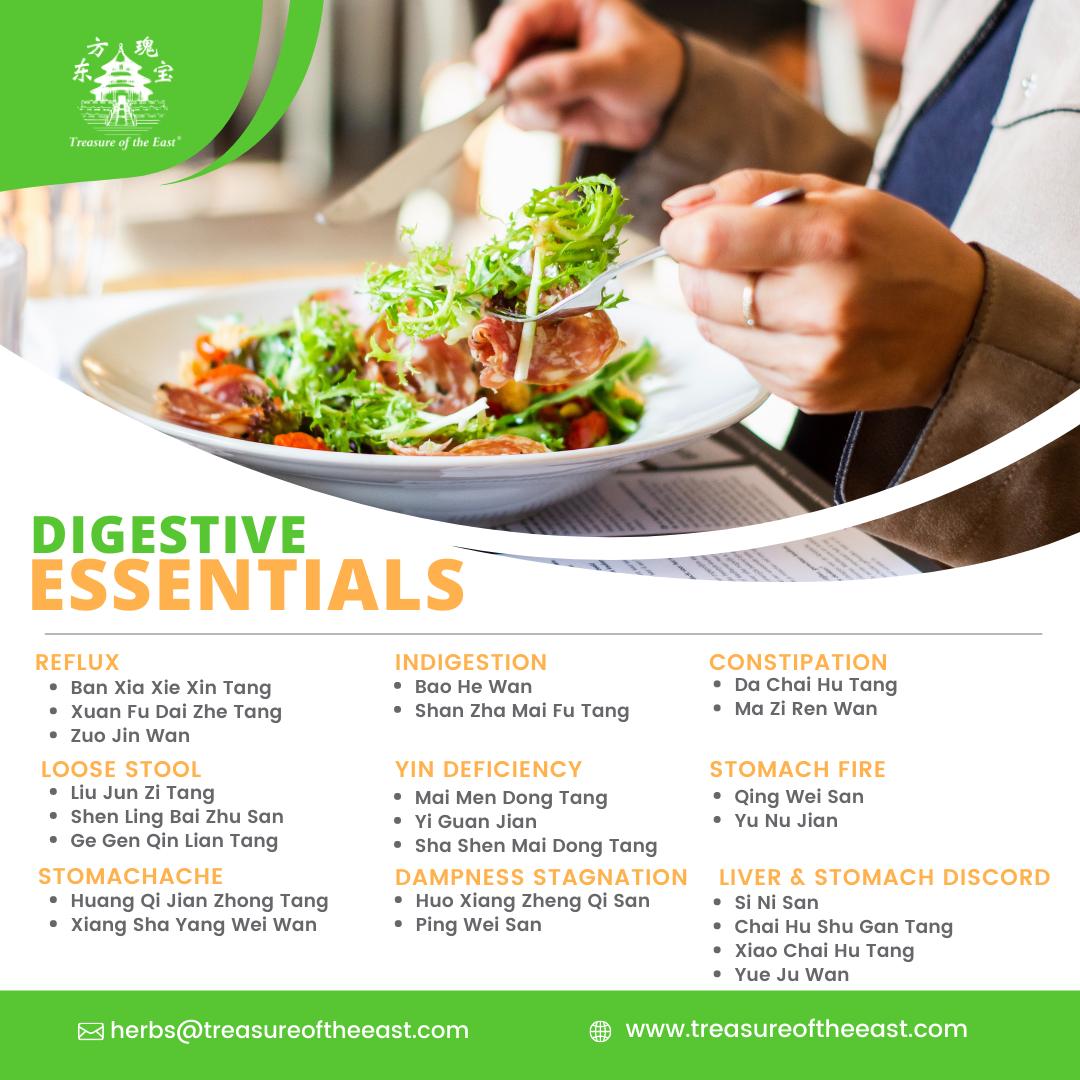
- Stomach and Lung Yin Deficiency
Dosage
Mix 4.5 g in hot water and drink as tea, 2-3 daily.
Classical source
Classical source
Mai Men Dong Tang comes from Jin Gui Yao Lue (Essentials from the Golden Cabinet) by Zhang Zhongjing, compiled around 200 to 220 CE in the Eastern Han dynasty. It sits in the chapter on Lung atrophy, Lung abscess, cough and rising qi, where it is given for great counterflow of qi rising upward with an uncomfortable throat, to stop the counterflow and bring qi down. Zhang gave ophiopogon in a large measure with only a little pinellia, so the moistening clearly leads. Mai men dong is ophiopogon root, its chief herb.
The pattern
The pattern
The pattern is Lung and Stomach yin deficiency with qi rebelling upward. In Chinese medicine the Stomach's fluids moisten the Lung, and both should send qi downward. When those fluids run low, the Lung dries and qi rises instead. The cough is dry and comes in tickly bouts, with little sputum, or a small amount that is sticky and hard to bring up. The throat feels parched or scratchy, the voice may tire, and the mouth is dry. The Stomach may push upward too, with nausea, hiccup or retching after coughing. The tongue is red and dry with little coat, and the pulse is thin and somewhat rapid. Talking, dry air and late afternoon make it worse; sips of water ease it briefly. Copious white or yellow sputum points to phlegm patterns instead.
How it works in Chinese medicine
How it works in Chinese medicine
The treatment principle is to nourish Lung and Stomach yin, moisten dryness and bring rebellious qi down. Ophiopogon is the chief, given in a large measure: sweet and slightly cold, it moistens the Lung, nourishes Stomach yin and clears the faint heat that dryness creates. A small amount of pinellia is the assistant: it turns rising qi back down and opens the stomach, and because there is so little of it, its drying nature cannot undo the moistening. Ginseng, jujube and licorice boost Stomach qi so that the Stomach can again make fluids for the Lung. The logic is to feed the Earth to moisten Metal, so the cough settles at its source.
Ingredients
Ingredients
- Mai Dong: Ophiopogon root
- Ban Xia (fa): Pinellia rhizome, processed
- Bai Shen: Ginseng root
- Gan Cao: Licorice root
- Da Zao: Jujube fruit
Five plant ingredients, with no animal or mineral substances. It contains licorice root.
How to use
How to use
The granules are a 5:1 full-spectrum, water-based extract, 100 g per bottle. Mix 4.5 g in hot water and drink as tea, 2-3 daily, or as directed by your practitioner.
Also made as capsules, for the same formula in a different form.
If you are pregnant, nursing, taking medication or managing a health condition, speak with your practitioner before use. Educational information only; these statements have not been evaluated by the FDA and this product is not intended to diagnose, treat, cure or prevent any disease.
In biomedical terms
In biomedical terms
In TCM terms, the Stomach's fluids run low, the Lung dries, and qi rises as a dry cough instead of descending. Research interprets the dryness partly through nitric oxide chemistry at the body's moist surfaces. In the airway, exhaled nitric oxide rises with a type of airway inflammation and is a standard, noninvasive marker of it [1]. In the stomach, nitrate in saliva is turned by mouth bacteria into nitrite; swallowed into an acid stomach, that nitrite is reduced to nitric oxide, which the lining absorbs, and strong acid suppression stops this chemistry [2]. In studies, nitric oxide donors stimulated mucus release from stomach-lining cells through cGMP, linking nitric oxide to the stomach's protective moisture [3].
On the formula side, in 38 people with Sjögren's syndrome, the Kampo extract of the formula raised saliva output on the gum test from 8.2 to 11.4 mL, a larger rise than with a comparison formula [4]. In studies, MDG-1, a fructan from ophiopogon root, the chief herb, lowered the Firmicutes to Bacteroidetes ratio and returned the gut flora toward normal [5], and an ophiopogon polysaccharide raised gut diversity, with Akkermansia muciniphila tracking inversely with liver fat [6]. A neutral polysaccharide from ginseng enriched an indole-producing gut bacterium whose metabolites strengthened the gut barrier through the AhR pathway [7]. Liquiritin apioside from licorice dose-dependently reduced capsaicin-induced coughing [8].
Clinical research
Clinical research
A meta-analysis of nine randomized trials in 2,453 participants found that the formula reduced the severity of cough compared with conventional cough medicines across various conditions [9]. In a randomized crossover trial in 24 adults over 65 with chronic obstructive pulmonary disease, eight weeks of the formula improved cough severity on a visual analogue scale [10]. In 43 adults with heightened cough sensitivity, two months or more of the formula raised the capsaicin cough threshold in 76 percent of those with asthma and 82 percent of those without [11].
Questions and answers
Questions and answers
What is Mai Men Dong Tang used for in Chinese medicine?
Mai Men Dong Tang is a classical formula traditionally used for Lung and Stomach yin deficiency with rising qi: a dry, tickly cough with little or sticky sputum, a parched throat, a dry mouth and sometimes nausea or retching after coughing. A large amount of ophiopogon moistens, a little pinellia brings qi down, and ginseng, jujube and licorice rebuild the Stomach. A practitioner usually confirms the pattern first.
What pattern is Mai Men Dong Tang for?
Lung and Stomach yin deficiency with qi rebelling upward. The Stomach no longer makes enough fluid to moisten the Lung, so the Lung dries and qi rises as a dry cough. Typical signs are a dry throat, scanty sticky sputum, a red, dry tongue with little coat and a thin, slightly rapid pulse. Plentiful white or yellow sputum points to a phlegm pattern instead.
How does Mai Men Dong Tang work?
In Chinese medicine terms, ophiopogon moistens the Lung and Stomach, pinellia turns rising qi down, and ginseng, jujube and licorice help the Stomach make fluids again. In biomedical terms, research interprets the dryness partly through nitric oxide chemistry at moist surfaces [2]. In 38 people with Sjögren's syndrome, the formula raised saliva output [4], and in studies a licorice compound reduced coughing [8].
What is the difference between Mai Men Dong Tang capsules and granules?
Both are 5:1 full-spectrum water extracts of the same five herbs from the same maker. The granules dissolve in hot water and are sipped as a tea, which many people find soothing for a dry throat and which makes the amount easy for a practitioner to adjust. The capsules hold the same kind of extract in a portable, tasteless form. Follow the label or your practitioner for how much to take.
Who should not take Mai Men Dong Tang?
If you are pregnant or trying to conceive, check with your practitioner first. Traditionally the formula is not used for a cough with plentiful phlegm, a thick greasy tongue coat, or chills and body aches. A cough lasting more than three weeks, coughing blood, breathlessness, chest pain, fever or weight loss needs prompt medical assessment before or alongside herbal care.
How long does Mai Men Dong Tang take to work?
In Chinese medicine, restoring fluids is gradual, so practitioners usually judge this formula over two to several weeks. The dryness of the throat and the urge to cough often ease first. In the study of heightened cough sensitivity, changes were measured after two months or more [11]. If nothing has shifted after a few weeks, it is worth asking whether the pattern was the right match.
References
References
- Dweik RA et al. (2011). An official ATS clinical practice guideline: interpretation of exhaled nitric oxide levels (FENO) for clinical applications. Am J Respir Crit Care Med. PubMed
- Mowat C et al. (2001). Alterations in intragastric nitrite and vitamin C levels during acid inhibitory therapy. Best Pract Res Clin Gastroenterol. PubMed
- Brown JF et al. (1993). Nitric oxide generators and cGMP stimulate mucus secretion by rat gastric mucosal cells. Am J Physiol. PubMed
- Ohno S et al. (1990). [The effect of bakumondo-to on salivary secretion in Sjögren syndrome]. Ryumachi. PubMed
- Shi LL et al. (2015). MDG-1, an Ophiopogon polysaccharide, regulate gut microbiota in high-fat diet-induced obese C57BL/6 mice. Int J Biol Macromol. PubMed
- Zhang L et al. (2022). MDG, an Ophiopogon japonicus polysaccharide, inhibits non-alcoholic fatty liver disease by regulating the abundance of Akkermansia muciniphila. Int J Biol Macromol. PubMed
- Wang D et al. (2025). Alistipes senegalensis is Critically Involved in Gut Barrier Repair Mediated by Panax Ginseng Neutral Polysaccharides in Aged Mice. Adv Sci (Weinh). PubMed
- Kamei J et al. (2003). Antitussive principles of Glycyrrhizae radix, a main component of the Kampo preparations Bakumondo-to (Mai-men-dong-tang). Eur J Pharmacol. PubMed
- Kim KI et al. (2016). A traditional herbal medication, Maekmoondong-tang, for cough: A systematic review and meta-analysis. J Ethnopharmacol. PubMed
- Mukaida K et al. (2011). A pilot study of the multiherb Kampo medicine bakumondoto for cough in patients with chronic obstructive pulmonary disease. Phytomedicine. PubMed
- Watanabe N et al. (2004). [The effects of bakumondo-to (mai-men-dong-tang) on asthmatic and non-asthmatic patients with increased cough sensitivity]. Nihon Kokyuki Gakkai Zasshi. PubMed
Share