Treasure of the East
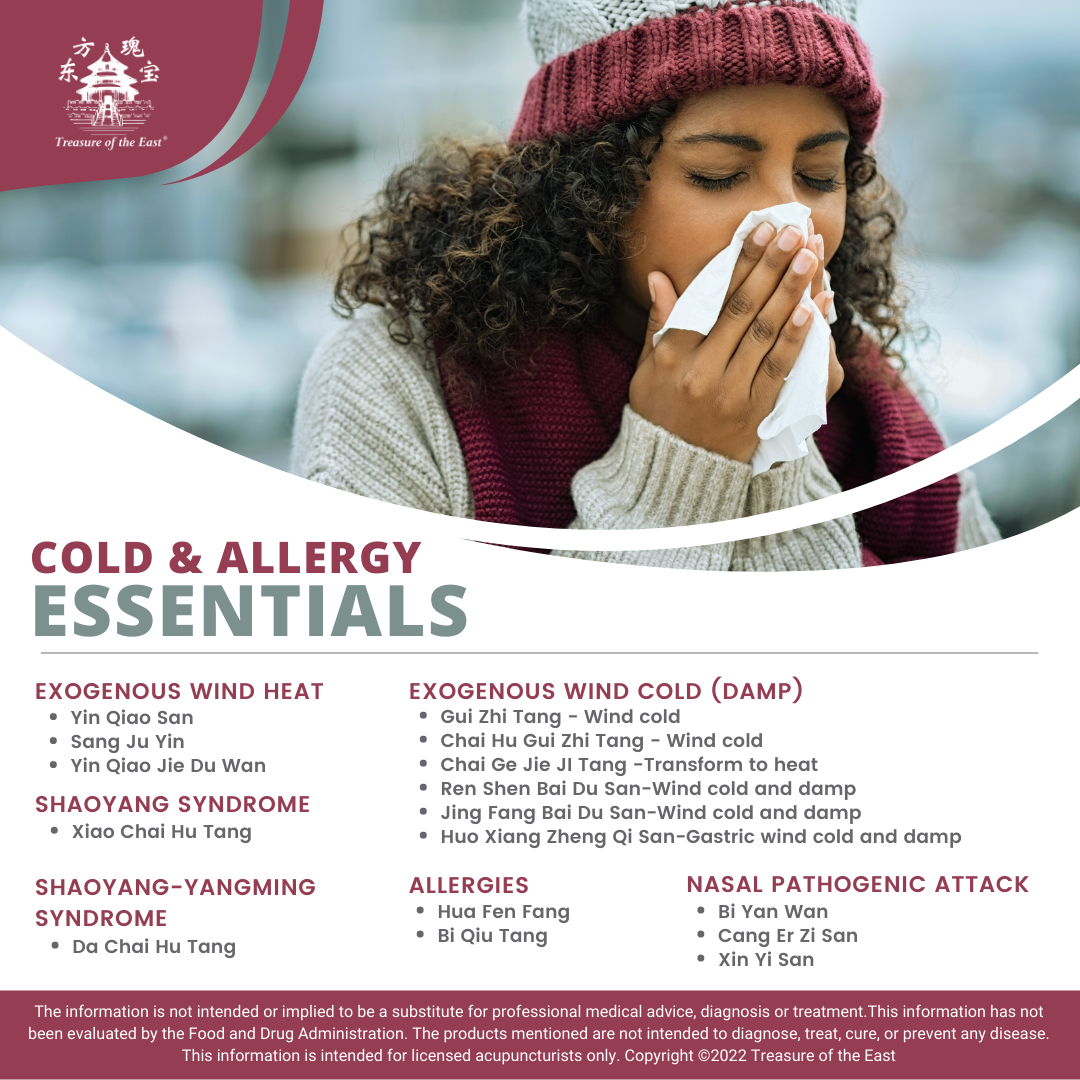
Jing Fang Bai Du San - 荆防败毒散 - Schizonepeta & Saposhnikovia Formula (Granules)
Jing Fang Bai Du San - 荆防败毒散 - Schizonepeta & Saposhnikovia Formula (Granules)
Couldn't load pickup availability
Not sure this is your formula?
Most people who search a formula name are guessing. Chorus Premium pairs you with a team of Chinese medicine practitioners and a PhD pharmacologist who match the formula to you, check it against your medications, and adjust it as you change.
Full-spectrum, water-based herbal extract; concentrated 5:1 granules (100g/bottle).
Item Number: J090
Chinese Name: 荆防败毒散, Jing Fang Bai Du San
English Name: Schizonepeta & Saposhnikovia Formula
Formula Principles:
- Induces sweat
- Releases the Exterior
- Dispels Wind
Ingredients:
| Qiang Huo |
Notopterygium Rhizome and Root |
| Du Huo | Pubescent Angelica Root |
| Chai Hu | Bupleurum Root |
| Qian Hu | Peucedanum Root |
| Zhi Qiao (Fu Chao) | Bitter Orange (Processed) * |
| Fu Ling | Poria |
| Jing Jie | Schizonepeta Herb |
| Fang Feng | Saposhnikovia Root |
| Jie Geng | Platycodon Root |
| Chuan Xiong | Chuanxiong Rhizome |
| Gan Cao | Licorice Root |
Allergen: Contains Wheat & Gluten *
TCM Pattern:
- Wind Cold Dampness Toxins
- Wind Cold Dampness Invade Skin or Interior
Dosage:
Mix 4.5 g in hot water and drink as tea, 2-3 daily.
Classical source
Classical source
Jing Fang Bai Du San is recorded in She Sheng Zhong Miao Fang (Marvelous Formulas for the Health of the Multitudes), compiled by Zhang Shiche and first printed in 1550, in the Ming dynasty. It grew out of an older formula for colds with body aches, leaving out the ginseng that props up a weak person and adding schizonepeta and saposhnikovia, two of the main herbs for wind at the surface. It was meant for people who are not depleted but have been caught by wind, cold and damp: chills, little or no sweating, headache and aching in the whole body. Bai du means to defeat toxin, here the pathogen lodged at the surface.
The pattern
The pattern
The pattern is exterior wind-cold-damp. In Chinese medicine the surface of the body, guarded by wei qi, is the first place weather gets in. When wind, cold and damp lodge there together, the pores close and damp fills the muscles. Chills outweigh fever, there is little or no sweating, the body and head feel heavy and ache all over, and the nose may be blocked or running. The tongue coat is thin, white and slightly greasy; the pulse is floating and tight or soft. In Chorus practice the same picture appears as a flare in people whose ying and wei are already out of balance: pale, itchy wheals brought on by cold or wind, arriving with body aches. Red, hot, burning skin, a sore red throat, or high fever with thirst points to a different pattern.
How it works in Chinese medicine
How it works in Chinese medicine
The treatment principle is to release the exterior, dispel wind, cold and damp, and stop pain. Schizonepeta and saposhnikovia are the chiefs: they open the surface and send wind out without adding much heat. Notopterygium and pubescent angelica deepen this, driving wind-damp out of the muscles and joints, the first from the upper body and the second from the lower, which is why the formula suits aches all over. Chuanxiong moves blood and eases headache. Bupleurum releases the muscle layer. Peucedanum, platycodon and bitter orange lift and lower Lung qi to clear the chest and nose, and poria drains damp. Licorice harmonises. The logic is to open the gate the weather came in through, briefly, and let it close once the pathogen has gone.
Ingredients
Ingredients
- Qiang Huo: Notopterygium root and rhizome
- Du Huo: Pubescent angelica root
- Chai Hu: Bupleurum root
- Qian Hu: Peucedanum root
- Zhi Qiao (fu chao): Bitter orange, bran-fried
- Fu Ling: Poria
- Jing Jie: Schizonepeta herb
- Fang Feng: Saposhnikovia root
- Jie Geng: Platycodon root
- Chuan Xiong: Chuanxiong rhizome (Szechuan lovage)
- Gan Cao: Licorice root
Eleven plant ingredients, with no animal or mineral substances. It contains licorice root. The Treasure of the East label states the product contains wheat and gluten, from the bran-fried bitter orange, so it is not suitable for anyone with celiac disease.
How to use
How to use
The granules are a 5:1 full-spectrum water extract, 100 g per bottle, mixed into hot water and drunk as a tea. Mix 4.5 g in hot water and drink as tea, 2-3 daily, or as directed by your practitioner.
If you are pregnant, nursing, taking medication or managing a health condition, speak with your practitioner before use. Educational information only; these statements have not been evaluated by the FDA and this product is not intended to diagnose, treat, cure or prevent any disease.
In biomedical terms
In biomedical terms
In TCM terms this is an excess pattern at the surface: cold has closed the pores and damp has settled in the muscles. Research interprets it mainly as too little nitric oxide in chilled skin and muscle. Cooling the skin switches off nitric oxide production in its fine vessels and removes their resting relaxation, while the nerves that tighten them release more noradrenaline [1]. Nitric oxide also helps the skin open for sweat: in 15 young men exercising in the heat, blocking it lowered skin blood flow and sweating [2], which fits a closed surface with no sweat. For the body aches, in ten healthy men cold exposure raised noradrenaline, and the rise tracked stickier platelets [3]. Chilling matters in people: in a randomised trial of 180 adults, 13 of 90 whose feet were chilled reported a cold over the next four to five days, against 5 of 90 controls [4]. At the nose the picture turns: in volunteers with a cold, nasal nitric oxide rose, and larger rises went with fewer symptoms the next day [5]. For cold-triggered wheals, research points to the skin, where 10 of 11 biopsies from acute urticaria showed the inflammatory form of nitric oxide synthase [6].
On the formula side, in studies the granules restored the gut flora and barrier and calmed immune disorder after cold, damp exposure [7]. In a study of allergic skin reactions they lowered IgE and inflammatory cytokines, restored short-chain fatty acid producing Clostridia and Bacteroidia, and raised butyrate and indole compounds [8]. They also changed histidine and histamine metabolism in the gut in a study of fatigue [9], and raised short-chain fatty acids in gut and blood in a study of arthritis [10].
Clinical research
Clinical research
In a randomised, double-blind, placebo-controlled trial of 138 people with a common cold of the wind-cold type, five days of Jing Fang granules shortened median recovery time from 7.0 to 3.3 days. Aversion to cold, nasal congestion, runny nose, cough, headache, throat itch and body aches cleared faster than on placebo, and recovery rates were higher [11]. Adverse reactions were uncommon and similar in the two groups.
Questions and answers
Questions and answers
What is Jing Fang Bai Du San used for in Chinese medicine?
Jing Fang Bai Du San is a classical formula traditionally used for exterior wind-cold-damp: chills with little sweating, a heavy, aching body and head, a stiff neck and a blocked or runny nose after exposure to cold, wind or damp. In Chorus practice it is also considered for cold-triggered flares that arrive with body aches. A practitioner usually confirms the pattern before recommending it, and it is used for short periods.
What pattern is Jing Fang Bai Du San for?
Exterior wind-cold-damp. Wind, cold and damp have lodged at the surface together, closing the pores and filling the muscles with damp. Typical signs are chills more than fever, no sweat, aching all over, a thin white, slightly greasy tongue coat and a floating pulse. Red, hot, burning skin, a sore red throat or high fever with thirst suggests a heat pattern instead.
How does Jing Fang Bai Du San work?
In Chinese medicine terms, schizonepeta and saposhnikovia open the surface and dispel wind, notopterygium and pubescent angelica drive wind-damp out of the muscles, and platycodon, peucedanum and bitter orange clear the chest and nose. In biomedical terms, a chilled surface is interpreted as switched-off nitric oxide in the skin's fine vessels [1]. In studies, the granules restored the gut flora and barrier after cold, damp exposure [7] and raised butyrate [8].
Does Jing Fang Bai Du San come as capsules or granules?
Chorus carries it as Treasure of the East granules only: a 5:1 full-spectrum water extract, 100 g per bottle, mixed into hot water and drunk as a tea. Drinking it warm suits a formula meant to open the surface. The label states the product contains wheat and gluten, so it is not suitable for anyone with celiac disease. Follow the label or your practitioner for how much to take.
Who should not take Jing Fang Bai Du San?
It is a dispersing formula, so it is traditionally kept for short courses and not used for heat patterns, red, hot flares, or for people who sweat easily, are very depleted or have signs of yin deficiency. Check with a practitioner first if you are pregnant or breastfeeding. It is not suitable for anyone with celiac disease, since the label states it contains wheat and gluten.
How long does Jing Fang Bai Du San take to work?
Exterior formulas act quickly in Chinese medicine, so practitioners judge this one over days rather than weeks and usually stop it once chills and aches lift. In a trial of the granules for wind-cold type colds, median recovery was 3.3 days against 7.0 on placebo [11]. If symptoms persist, worsen or include high fever, it is time to be reassessed.
References
References
- Johnson JM et al. (2018). Skin vasoconstriction as a heat conservation thermoeffector. Handb Clin Neurol. PubMed
- Schmidt MD et al. (2020). Regional influence of nitric oxide on cutaneous vasodilatation and sweating during exercise-heat stress in young men. Exp Physiol. PubMed
- Kawahara J et al. (1989). Acute effects of exposure to cold on blood pressure, platelet function and sympathetic nervous activity in humans. Am J Hypertens. PubMed
- Johnson C et al. (2005). Acute cooling of the feet and the onset of common cold symptoms. Fam Pract. PubMed
- Sanders SP et al. (2004). Role of nasal nitric oxide in the resolution of experimental rhinovirus infection. J Allergy Clin Immunol. PubMed
- Becherel PA et al. (1997). Inducible nitric oxide synthase and proinflammatory cytokine expression by human keratinocytes during acute urticaria. Mol Med. PubMed
- Li S et al. (2023). Jingfang granules ameliorate inflammation and immune disorders in mice exposed to low temperature and high humidity by restoring the dysregulation of gut microbiota and fecal metabolites. Biomed Pharmacother. PubMed
- Song X et al. (2026). Multi-omics analysis revealed that Jingfang Mixture alleviates inflammation in an OVA/Al(OH)3-induced urticaria-like rat model by regulating the AMPK/p38 MAPK/PI3K-Akt pathway associated with the gut-skin axis. Front Cell Infect Microbiol. PubMed
- Wang K et al. (2024). [Therapeutic effect and mechanism of Jingfang Granules on chronic fatigue syndrome based on intestinal flora and metabolomics]. Zhongguo Zhong Yao Za Zhi. PubMed
- Wang X et al. (2025). Jingfang Granules alleviates the lipid peroxidation induced ferroptosis in rheumatoid arthritis rats by regulating gut microbiota and metabolism of short chain fatty acids. J Ethnopharmacol. PubMed
- Yang DW et al. (2022). [Randomized double-blind placebo-controlled trial of Jingfang Granules in treatment of common cold(wind-cold syndrome)]. Zhongguo Zhong Yao Za Zhi. PubMed
Share