Treasure of the East
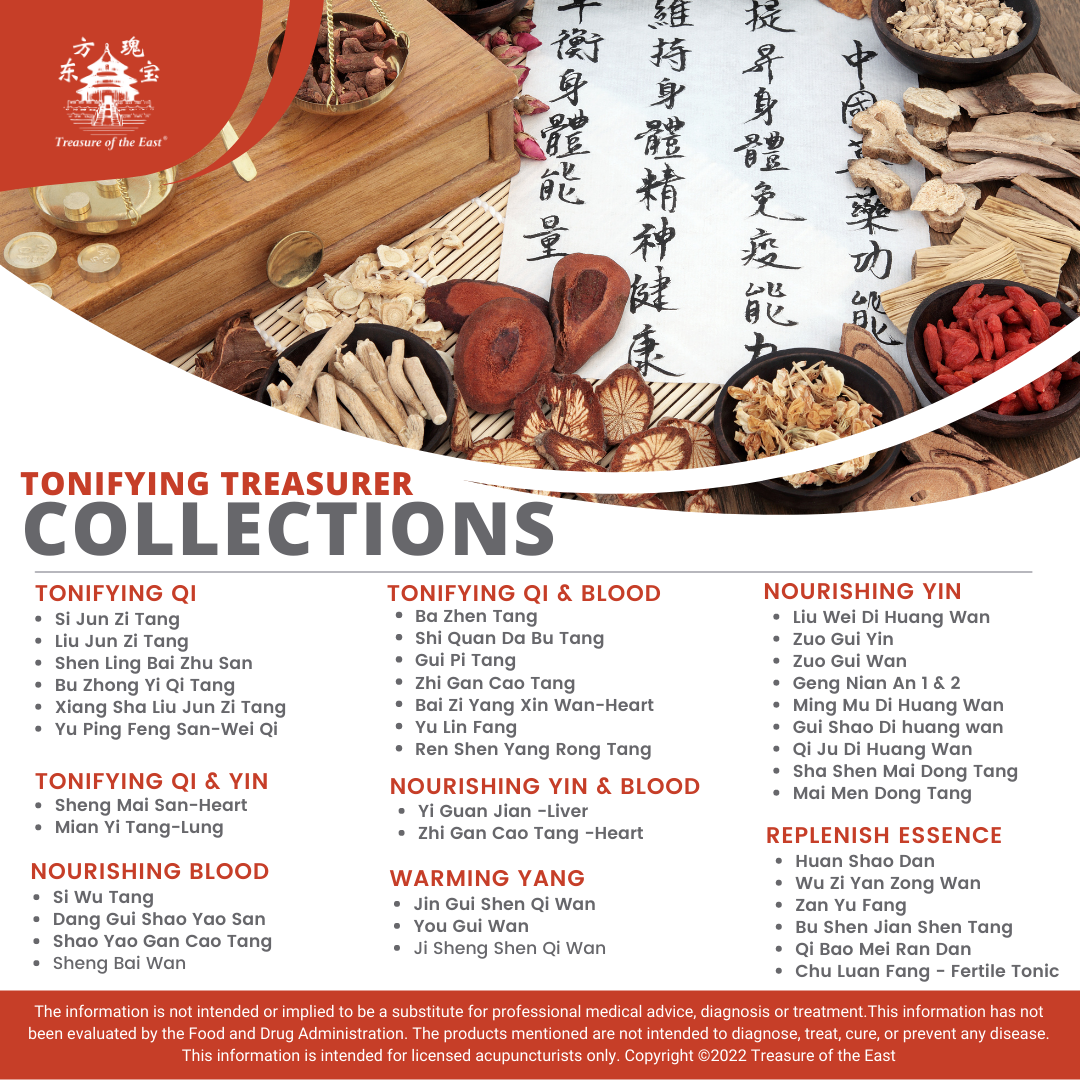
Huan Shao Dan - 还少丹 - Youth Return Formula (Granules)
Huan Shao Dan - 还少丹 - Youth Return Formula (Granules)
Couldn't load pickup availability
Not sure this is your formula?
Most people who search a formula name are guessing. Chorus Premium pairs you with a team of Chinese medicine practitioners and a PhD pharmacologist who match the formula to you, check it against your medications, and adjust it as you change.
Full-spectrum, water-based herbal extract; concentrated 5:1 granules (100g/bottle).
Item Number: H025
Chinese Name: 还少丹, Huan Shao Dan
English Name: Youth Return Formula
Formula Principles:
- Tonifies the Spleen and Kidneys
- Nourishes the Heart
- Enriches the Yin
- Nourishes the Blood and Yang
- Augments Qi
- Promotes Longevity*
Ingredients (2023 Formulation):
| Ba Ji Tian | Morinda Root |
| Da Zao | Jujube Fruit |
| Du Zhong (Yan Zhi) | Eucommia Bark (Processed) |
| Fu Ling | Poria |
| Gou Qi Zi | Goji Berry |
| Niu Xi (Huai) | Achyranthes Root |
| Rou Cong Rong (Jiu) | Cistanche (Processed) |
| Shan Yao | Dioscorea Rhizome |
| Shan Yu Rou | Cornus Fruit (Processed) |
| Shi Chang Pu | Acorus Root |
| Shu Di Huang | Rehmannia Root (Processed) |
| Wu Wei Zi (Cu Zhi) | Schisandra Berry (Processed) |
| Xiao Hui Xiang (Yan) | Fennel Fruit (Processed) |
| Yuan Zhi (Zhi) | Polygala Root (Processed) |
| Zhi Shi (Fu Chao) | Immature Bitter Orange (Processed) |
Ingredients (Updated Formulation):
| Shu Di Huang | Rehmannia Root (Processed) |
| Gou Qi Zi | Goji Berry |
| Shan Yu Rou | Cornus Fruit (Processed) |
| Rou Cong Rong (Jiu) | Cistanche (Processed) |
| Yuan Zhi (Zhi) | Polygala Root (Processed) |
| Ba Ji Tian | Morinda Root |
| Xiao Hui Xiang (Yan) | Fennel Fruit (Processed) |
| Du Zhong (Yan Zhi) | Eucommia Bark (Processed) |
| Niu Xi (Huai) | Achyranthes Root |
| Chi Shi Zhi |
Halloysitium Rubrum |
| Fu Ling | Poria |
| Shan Yao | Dioscorea Rhizome |
| Wu Wei Zi (Cu Zhi) | Schisandra Berry (Processed) |
| Shi Chang Pu | Acorus Root |
Allergen: Contains Wheat & Gluten
Ingredients provided for reference. Bottles containing 2023 Formulation will be fulfilled until they are sold out - to verify which formulation is currently being shipped, contact us through chat or at herbs@treasureoftheeast.com
TCM Pattern
- Jing and Blood Deficiency
- Kidney, Heart and Spleen Deficiency
- Weakness of Yuan Qi
Dosage
Mix 4.5 g in hot water and drink as tea, 2-3 daily.
Also available as Capsules.
Classical source
Classical source
Huan Shao Dan is recorded in Hong Shi Ji Yan Fang (Collected Tested Formulas of Mr Hong), compiled by the scholar-official Hong Zun in 1170, in the Southern Song dynasty. It was written for people worn down in both Spleen and Kidney, with weakness, poor appetite, an aching lower back, failing memory and signs of ageing before their time. Its design is unusual: it warms Kidney yang and enriches yin and essence at once, adds herbs that strengthen digestion, and finishes with herbs that settle the mind and connect the Heart with the Kidney. Huan means to return and shao means young, so the name means returning to youth.
The pattern
The pattern
The pattern is Spleen and Kidney deficiency with depleted essence and blood (pi shen liang xu, jing xue bu zu). In Chinese medicine the Spleen makes qi and blood from food, the Kidney stores essence, and essence feeds the brain, bones and hair. When both organs are worn down by age, overwork or long illness, the picture is one of general decline. There is tiredness, poor appetite, loose stools and an aching, weak lower back and knees. Memory and concentration slip, the eyes tire, the ears may ring, and hair greys before its time. The tongue is pale with a thin white coat, and the pulse is deep and thin, weakest at the Kidney position. Overwork and late nights make it worse. A red tongue with little coat and night heat point to Kidney yin deficiency with heat instead.
How it works in Chinese medicine
How it works in Chinese medicine
The treatment principle is to warm and tonify the Spleen and Kidney, replenish essence and blood, and calm the mind. Cistanche and morinda root are the chiefs, warming Kidney yang gently without drying. Prepared rehmannia, goji berry, eucommia and achyranthes are the deputies, nourishing essence and blood and strengthening the lower back and knees. Cornus, schisandra and red halloysite hold in what is restored, and fennel warms the lower burner. Chinese yam and poria strengthen the Spleen so the rich tonics are digested. Polygala and acorus clear the mind and link the Heart with the Kidney, which is why the formula is used for failing memory as well as physical weakness.
Ingredients
Ingredients
- Shu Di Huang: Rehmannia root, prepared
- Gou Qi Zi: Goji berry
- Shan Yu Rou: Cornus fruit, processed
- Rou Cong Rong (jiu): Cistanche, wine-processed
- Yuan Zhi (zhi): Polygala root, prepared
- Ba Ji Tian: Morinda root
- Xiao Hui Xiang (yan): Fennel fruit, salt-processed
- Du Zhong (yan zhi): Eucommia bark, salt-processed
- Niu Xi (huai): Achyranthes root
- Chi Shi Zhi: Red halloysite
- Fu Ling: Poria
- Shan Yao: Chinese yam (dioscorea rhizome)
- Wu Wei Zi (cu zhi): Schisandra berry, vinegar-processed
- Shi Chang Pu: Acorus rhizome
Fourteen ingredients: thirteen plant ingredients and one mineral, red halloysite (Chi Shi Zhi). Cistanche is processed with wine, eucommia and fennel with salt, and schisandra with vinegar. The Treasure of the East label states the product contains wheat and gluten, so it is not suitable for anyone with celiac disease.
How to use
How to use
The granules are a 5:1 full-spectrum water extract, 100 g per bottle, mixed into hot water and drunk as a tea. Mix 4.5 g in hot water and drink as tea, 2-3 daily, or as directed by your practitioner.
If you are pregnant, nursing, taking medication or managing a health condition, speak with your practitioner before use. Educational information only; these statements have not been evaluated by the FDA and this product is not intended to diagnose, treat, cure or prevent any disease.
In biomedical terms
In biomedical terms
In TCM terms this is a pattern of decline: the Spleen makes too little, the Kidney stores too little, and the mind loses its sharpness. Research interprets it as nitric oxide signalling that fades with age and cells that run short of energy. With age, blood vessels dilate less well because endothelial nitric oxide synthase changes, the inflammatory form rises and oxidative stress increases [1]. In the brain, a study found that ageing blocked the nitric oxide rise in the basal forebrain that normally drives deep recovery sleep after sleep loss [2]. For tiredness and weak muscles, in studies Spleen qi deficiency lowered muscle energy (ATP) and damaged mitochondria [3]. Hydrogen sulfide follows bone: in femur tissue from people with osteoporosis, the two main enzymes that make hydrogen sulfide were lower [4].
On the formula side, in studies Huan Shao Dan improved learning and memory, protected brain microvessels and the blood-brain barrier, lowered bacterial products in the brain and reshaped the gut microbiota [5]. It also calmed overactive brain immune cells by lowering their reliance on glycolysis, with less inflammation [6]. Among its herbs, schisandra restored gut microbial diversity, Lactobacillus and butyrate [7], Chinese yam polysaccharide raised Bifidobacterium and short-chain fatty acids [8], polygala oligosaccharide esters restored Ligilactobacillus and lowered the microbial metabolite TMAO [9], and acorus oils raised Prevotella copri, with their protective effect on the brain lost when the gut microbiota was depleted [10]. Achyranthes polysaccharide is broken down by human gut Bacteroides into acetate and propionate [11].
Clinical research
Clinical research
In a controlled clinical report of 309 people with Kidney yang deficiency, 1.5 to 3 months of Huan Shao Dan as capsules or pills improved symptom scores and memory scores, with liver and kidney function, blood sugar, cholesterol, blood pressure and heart rate unchanged [12]. In a randomised multicentre trial of 248 men with erectile dysfunction of the Spleen and Kidney deficiency pattern, four weeks of Huanshao Capsules, a patent form of the formula, gave a higher overall response on the IIEF-5 erectile function score than Wuzi Yanzong pills (76.6 versus 67.8 percent) and greater improvement in Chinese medicine symptom scores [13].
Questions and answers
Questions and answers
What is Huan Shao Dan used for in Chinese medicine?
Huan Shao Dan is a classical Song dynasty formula traditionally used for Spleen and Kidney deficiency with depleted essence and blood: tiredness, poor appetite, an aching, weak lower back and knees, failing memory and concentration, and signs of ageing before their time. It warms Kidney yang, enriches essence, strengthens digestion and settles the mind. A practitioner usually confirms the pattern before recommending it.
What pattern is Huan Shao Dan for?
Spleen and Kidney deficiency with depleted essence and blood (pi shen liang xu, jing xue bu zu). Digestion is weak, the Kidney's reserves are low, and the mind is poorly nourished. Typical signs are a pale tongue with a thin white coat and a deep, thin pulse. A red tongue with little coat, night sweats and heat point to Kidney yin deficiency with heat, which needs a cooler formula.
How does Huan Shao Dan work?
In Chinese medicine terms it warms the Kidney with cistanche and morinda, nourishes essence with rehmannia and goji, strengthens the Spleen with Chinese yam and poria, and clears the mind with polygala and acorus. In biomedical terms, research links the pattern to nitric oxide signalling that fades with age [1]. In studies the formula improved memory, protected the blood-brain barrier and reshaped the gut microbiota [5], and calmed inflammation in brain immune cells [6].
How is Huan Shao Dan different from Jin Gui Shen Qi Wan?
Jin Gui Shen Qi Wan warms Kidney yang within a frame of yin tonics and herbs that drain fluid, so it suits cold, weakness and fluid retention. Huan Shao Dan reaches further: it adds herbs that strengthen the Spleen and herbs that calm and sharpen the mind. Practitioners choose it when Kidney decline comes with weak digestion, poor memory and general depletion rather than cold and fluid alone.
Who should not take Huan Shao Dan?
If you are pregnant or trying to conceive, check with your practitioner first. Check with a practitioner too if you are breastfeeding or take regular medication. It is not suitable for anyone with celiac disease, since the label states it contains wheat and gluten. Traditionally it is not used during a cold or fever, or when there are clear heat signs such as a red tongue, thirst and night sweats.
How long does Huan Shao Dan take to work?
In Chinese medicine, essence and blood are rebuilt slowly, so practitioners usually judge a building formula like this over weeks to months rather than days. In a controlled clinical report, symptom scores were assessed after 1.5 to 3 months [12]. If nothing has shifted after several weeks, it is worth asking whether the pattern was the right match.
References
References
- Brandes RP et al. (2005). Endothelial aging. Cardiovasc Res. PubMed
- Rytkönen KM et al. (2010). Nitric oxide mediated recovery sleep is attenuated with aging. Neurobiol Aging. PubMed
- Yong RL et al. (2020). [Effects of electroacupuncture at "Zusanli"(ST36) on ultrastructure and mitochondrial dynamics of skeletal muscle in rats with spleen qi deficiency syndrome]. Zhen Ci Yan Jiu. PubMed
- Hao YM et al. (2021). Association of Hydrogen Sulfide with Femoral Bone Mineral Density in Osteoporosis Patients: A Preliminary Study. Med Sci Monit. PubMed
- Su Y et al. (2024). Proteomic analysis and experimental validation reveal the blood-brain barrier protective of Huanshaodan in the treatment of SAMP8 mouse model of Alzheimer's disease. Chin Med. PubMed
- Shang C et al. (2024). Huanshaodan regulates microglial glucose metabolism reprogramming to alleviate neuroinflammation in AD mice through mTOR/HIF-1α signaling pathway. Front Pharmacol. PubMed
- Yan T et al. (2021). Schisandra chinensis ameliorates depressive-like behaviors by regulating microbiota-gut-brain axis via its anti-inflammation activity. Phytother Res. PubMed
- Bai Y et al. (2023). Gut microbial fermentation promotes the intestinal anti-inflammatory activity of Chinese yam polysaccharides. Food Chem. PubMed
- Wang Y et al. (2026). Polygala oligosaccharide esters improve memory disorder by restoring gut microbiota homeostasis through the regulation of the "gut-brain" axis. Chin Med. PubMed
- Huang Y et al. (2024). Acorus tatarinowii oils exert protective effects on microglia-mediated inflammatory injury via restoring gut microbiota composition in experimental stroke rats. Brain Res Bull. PubMed
- Wen C et al. (2023). A pectic polysaccharide isolated from Achyranthes bidentata is metabolized by human gut Bacteroides spp. Int J Biol Macromol. PubMed
- Du X et al. (1992). [Effect on anti-aging and treating yang deficiency of kidney with huanshao dan capsules. A clinical report of 309 cases]. Zhongguo Zhong Xi Yi Jie He Za Zhi. PubMed
- Geng Q et al. (2019). [Huanshao Capsules for erectile dysfunction with spleen and kidney deficiency: A multicentered clinical trial]. Zhonghua Nan Ke Xue. PubMed
Share