Treasure of the East
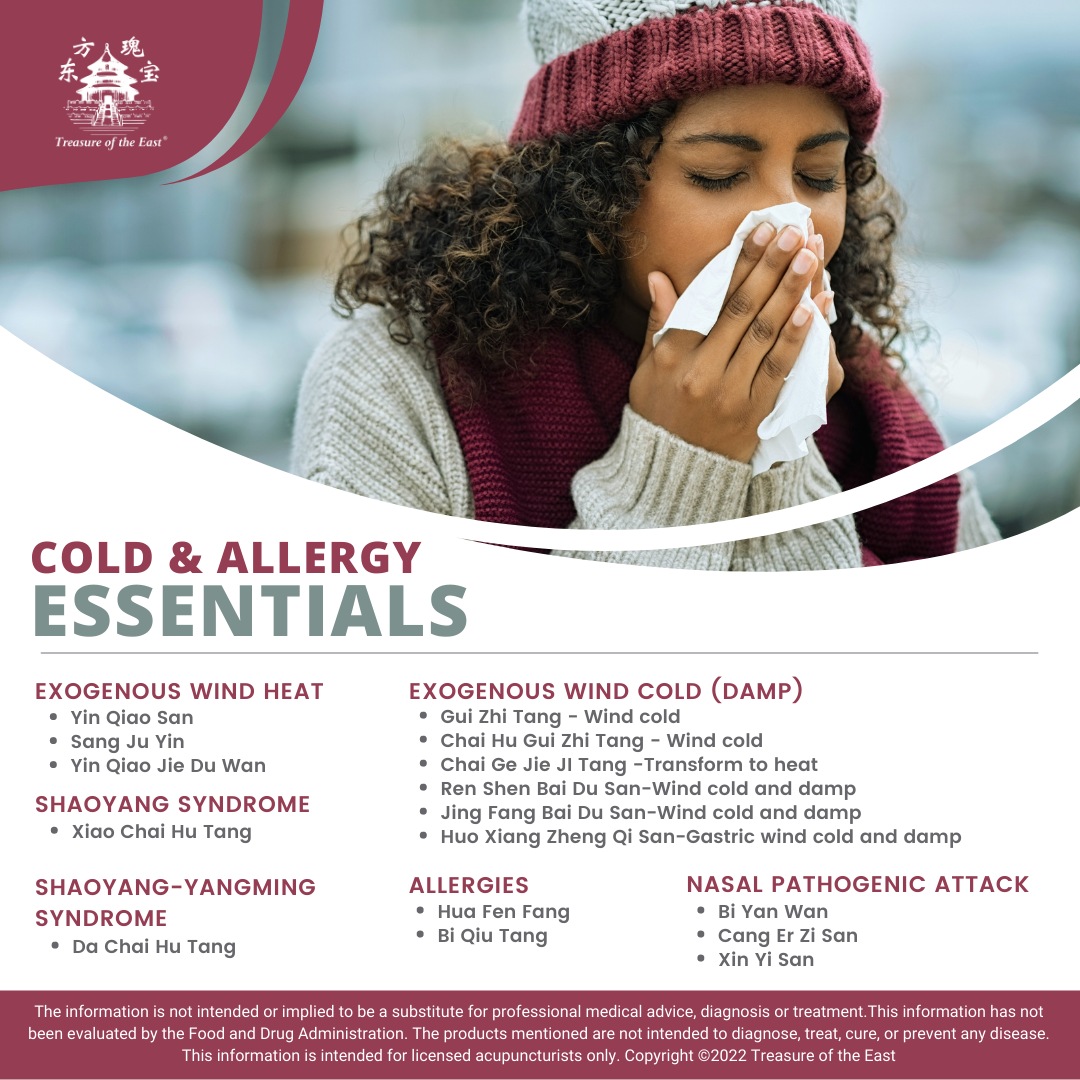
Gui Zhi Tang - 桂枝汤 - Cinnamon Twig Decoction (Granules)
Gui Zhi Tang - 桂枝汤 - Cinnamon Twig Decoction (Granules)
Couldn't load pickup availability
Not sure this is your formula?
Most people who search a formula name are guessing. Chorus Premium pairs you with a team of Chinese medicine practitioners and a PhD pharmacologist who match the formula to you, check it against your medications, and adjust it as you change.
Full-spectrum, water-based herbal extract; concentrated 5:1 granules (100g/bottle).
Item Number: G062
Chinese Name: 桂枝汤, Gui Zhi Tang
English Name: Cinnamon Twig Decoction
Formula Principles:
- Releases Wind-Cold from exterior
- Regulates and harmonizes the Ying and Wei*
Ingredients:
| Gui Zhi | Cinnamon Twig |
| Bai Shao | White Peony Root |
| Sheng Jiang | Ginger |
| Gan Cao (Mi) | Licorice Root (Processed) |
| Da Zao | Jujube Fruit |
TCM Pattern
- Wing and Wei deficiency
- Wind-Cold Invasion
- Tai Yang Zhong Feng
Dosage
Mix 4.5 g in hot water and drink as tea, 2-3 daily.
Also available as Capsules.
Classical source
Classical source
Gui Zhi Tang is the first formula of the Shang Han Lun (Discussion of Cold Damage), written by Zhang Zhongjing at the end of the Eastern Han dynasty, around 200 to 220 CE. Line 12 gives it for Taiyang wind-strike, in which fever, aversion to wind and cold, sweating that comes by itself, a snuffly nose and dry retching appear together. The text tells the patient to sip hot, thin rice porridge afterwards and stay covered until a light, even sweat appears. The Qing physician Ke Qin called it the foremost of Zhang Zhongjing's formulas. The name comes from its chief herb, gui zhi, cinnamon twig.
The pattern
The pattern
The pattern is ying and wei disharmony (ying wei bu he), the picture the Shang Han Lun calls Taiyang wind-strike. Defensive (wei) qi guards the surface; nutritive (ying) qi nourishes from within. When wind meets a surface whose guard is a little weak, the two fall out of step: the pores stay open, so sweat seeps out, yet the wind is not cleared. There is chilliness in a draught, mild fever or warmth, a damp forehead or back, a stiff neck, a snuffly nose, and sometimes pale wheals after wind or cold. The tongue is pale or normal with a thin white coat; the pulse is floating and moderate. Warmth and rest help. High fever without sweating, thirst, a sore red throat or hot, red wheals point to a different pattern.
How it works in Chinese medicine
How it works in Chinese medicine
The treatment principle is to release the muscle layer and harmonise ying and wei. Cinnamon twig, the chief, warms the channels and helps the defensive qi push wind out from the surface. White peony, the deputy, holds the nutritive qi in so it does not leak away as sweat. This pairing is the heart of the formula: one disperses and one gathers, so the surface opens just enough to let the wind out and then closes. Fresh ginger helps the cinnamon warm the surface and settles the stomach; jujube helps the peony nourish. Honey-fried licorice harmonises them all. Because the formula also works through the middle, warm porridge after a dose was part of the classical method.
Ingredients
Ingredients
- Gui Zhi: Cinnamon twig
- Bai Shao: White peony root
- Sheng Jiang: Ginger rhizome (fresh)
- Gan Cao (mi): Licorice root, honey-fried
- Da Zao: Jujube fruit (Chinese red date)
Five plant ingredients, with no animal or mineral substances. It contains honey-fried licorice root.
How to use
How to use
The granules are a 5:1 full-spectrum water extract, 100 g per bottle, mixed into hot water and drunk as a tea. The capsules hold the same kind of extract, 100 capsules per bottle. Follow the label or your practitioner for how much to take.
If you are pregnant, nursing, taking medication or managing a health condition, speak with your practitioner before use. Educational information only; these statements have not been evaluated by the FDA and this product is not intended to diagnose, treat, cure or prevent any disease.
In biomedical terms
In biomedical terms
In TCM terms this is a surface that opens too easily: sweat leaks out while the wind stays in. Research interprets it as nitric oxide holding the skin's vessels and sweat glands open. In people under heat stress, nitric oxide carries part of the active widening of skin vessels: blocking it in the skin cut that widening by about a third [1]. During exercise in the heat, nitric oxide synthase supports both sweating and skin blood flow [2]. For wheals that rise with wind: in acute urticaria, skin cells inside the wheal made the inducible form of nitric oxide synthase together with the inflammatory signals TNF-alpha and IL-6, while unaffected skin from the same people did not [3].
On the formula side, Gui Zhi Tang raised heme oxygenase-1, the enzyme that makes the gas carbon monoxide, which research interprets as an inflammatory brake, and lowered TNF-alpha, IL-6 and prostaglandin E2 in activated immune cells [4]. In studies of irritated lungs it lowered TNF-alpha, IL-6 and IL-1 beta and damped NF-kappaB signalling [5]. Among its herbs, a water extract of cinnamon, from the same plant as cinnamon twig, raised gut diversity and Bifidobacterium longum in a placebo-controlled trial of 70 adults with diarrhoea symptoms [6], and cinnamaldehyde, cinnamon's main aromatic compound, raised Lactobacillus johnsonii [7]. White peony extract eased dermatitis, strengthened the gut lining and partly restored gut diversity [8], and its compound paeoniflorin raised Lactobacillus and Bifidobacterium [9].
Clinical research
Clinical research
Gui Zhi Tang has long been used in Korea, China and Japan for the common cold, headache and fever [4]. A network meta-analysis of 50 randomised trials in 5,814 people with chronic spontaneous urticaria found that combinations of an antihistamine with Gui Zhi Tang consistently ranked among the most effective for symptom improvement. In the same analysis, loratadine combined with Gui Zhi Tang was associated with a lower risk of side effects than the antihistamine alone [10].
Questions and answers
Questions and answers
What is Gui Zhi Tang used for in Chinese medicine?
Gui Zhi Tang is the first formula of the Shang Han Lun, traditionally used for ying and wei disharmony: chilliness in a draught, mild fever, sweating that brings no relief, a stiff neck and a snuffly nose, or pale wheals that rise after wind or cold. It warms the surface, lets wind out and helps the pores close again. A practitioner usually confirms the pattern first.
What pattern is Gui Zhi Tang for?
Ying and wei disharmony, called Taiyang wind-strike in the Shang Han Lun: the surface is open and sweating, yet wind is not cleared. Typical signs are a thin white tongue coat and a floating, moderate pulse. Research interprets the open, sweating surface as nitric oxide keeping skin vessels and sweat glands open [1] [2]. High fever without sweating, thirst or a sore red throat point elsewhere.
How does Gui Zhi Tang work?
In Chinese medicine terms, cinnamon twig warms and opens the surface while white peony gathers and holds the nutritive qi, so the pores open just enough to let wind out and then close. In biomedical terms, the formula raised heme oxygenase-1, the enzyme that makes carbon monoxide, and lowered the inflammatory signals TNF-alpha and IL-6 [4]. Cinnamon raised Bifidobacterium in a placebo-controlled trial [6].
What is the difference between Gui Zhi Tang capsules and granules?
Both are 5:1 full-spectrum water extracts of the same five herbs from the same maker. The granules dissolve in hot water and are drunk as a tea, which suits a warming formula and lets a practitioner adjust the amount easily. The capsules hold the same kind of extract in a portable, tasteless form. Follow the label or your practitioner for how much to take.
Who should not take Gui Zhi Tang?
Check with a practitioner first if you are pregnant or breastfeeding or take prescription medication. Gui Zhi Tang is warming, so traditionally it is not used when there is high fever without sweating, thirst, a sore red throat, a red tongue or hot, red, burning wheals. The classical text also asks for plain, warm food while taking it, avoiding raw, cold, greasy and spicy food and alcohol.
How long does Gui Zhi Tang take to work?
For an acute surface pattern, the classical text expects change within a day or so, judged by a light, even sweat after which the chill and fever ease. When the same pattern lingers as easy sweating or wheals brought on by wind and cold, practitioners judge it over weeks instead. If nothing shifts, it is worth asking whether the pattern was the right match.
References
References
- Kellogg DL Jr et al. (1998). Nitric oxide and cutaneous active vasodilation during heat stress in humans. J Appl Physiol (1985). PubMed
- Louie JC et al. (2016). The interactive contributions of Na(+) /K(+) -ATPase and nitric oxide synthase to sweating and cutaneous vasodilatation during exercise in the heat. J Physiol. PubMed
- Bécherel PA et al. (1997). Inducible nitric oxide synthase and proinflammatory cytokine expression by human keratinocytes during acute urticaria. Mol Med. PubMed
- Yoo SR et al. (2016). Gyeji-tang water extract exerts anti-inflammatory activity through inhibition of ERK and NF-κB pathways in lipopolysaccharide-stimulated RAW 264.7 cells. BMC Complement Altern Med. PubMed
- Baek EB et al. (2022). Anti-inflammatory effect of Gyeji-tang in a chronic obstructive pulmonary disease mouse model induced by cigarette smoke and lipopolysaccharide. Pharm Biol. PubMed
- Park SY et al. (2023). Cinnamon (Cinnamomum cassia) water extract improves diarrhea symptoms by changing the gut environment: a randomized controlled trial. Food Funct. PubMed
- Zhao H et al. (2021). Cinnamaldehyde Improves Metabolic Functions in Streptozotocin-Induced Diabetic Mice by Regulating Gut Microbiota. Drug Des Devel Ther. PubMed
- Lee SY et al. (2022). Paeonia lactiflora Pallas extract alleviates antibiotics and DNCB-induced atopic dermatitis symptoms by suppressing inflammation and changing the gut microbiota composition in mice. Biomed Pharmacother. PubMed
- Xia M et al. (2025). Paeoniflorin improves atherosclerosis by regulating the gut microbiota and fecal metabolites. mSystems. PubMed
- Lv H et al. (2026). Chinese herbal formulas as adjuncts to antihistamines in chronic spontaneous urticaria: a network meta-analysis of efficacy, recurrence, and safety. Front Pharmacol. PubMed
Share