Treasure of the East
Gan Mai Da Zao Tang - 甘麦大枣汤 - Licorice & Jujube Combination (Granules)
Gan Mai Da Zao Tang - 甘麦大枣汤 - Licorice & Jujube Combination (Granules)
Couldn't load pickup availability
Not sure this is your formula?
Most people who search a formula name are guessing. Chorus Premium pairs you with a team of Chinese medicine practitioners and a PhD pharmacologist who match the formula to you, check it against your medications, and adjust it as you change.
Full-spectrum, water-based herbal extract; concentrated 5:1 granules (100g/bottle).
Item Number: G012
Chinese Name: 甘麦大枣汤, Gan Mai Da Zao Tang
English Name: Licorice & Jujube Combination
Formula Principles:
- Nourishes the Heart
- Calms the Shen
- Harmonizes the Middle Jiao
- Relaxes tension
- Tonifies Spleen Qi*
Ingredients:
| Gan Cao | Licorice Root |
| Fu Xiao Mai |
Light Wheat * |
| Da Zao | Jujube Fruit |
Allergen: Contains Wheat & Gluten *
TCM Pattern
- Heart Blood Deficiency with Liver Qi Stagnation
- Mood disturbance from Heart disharmony
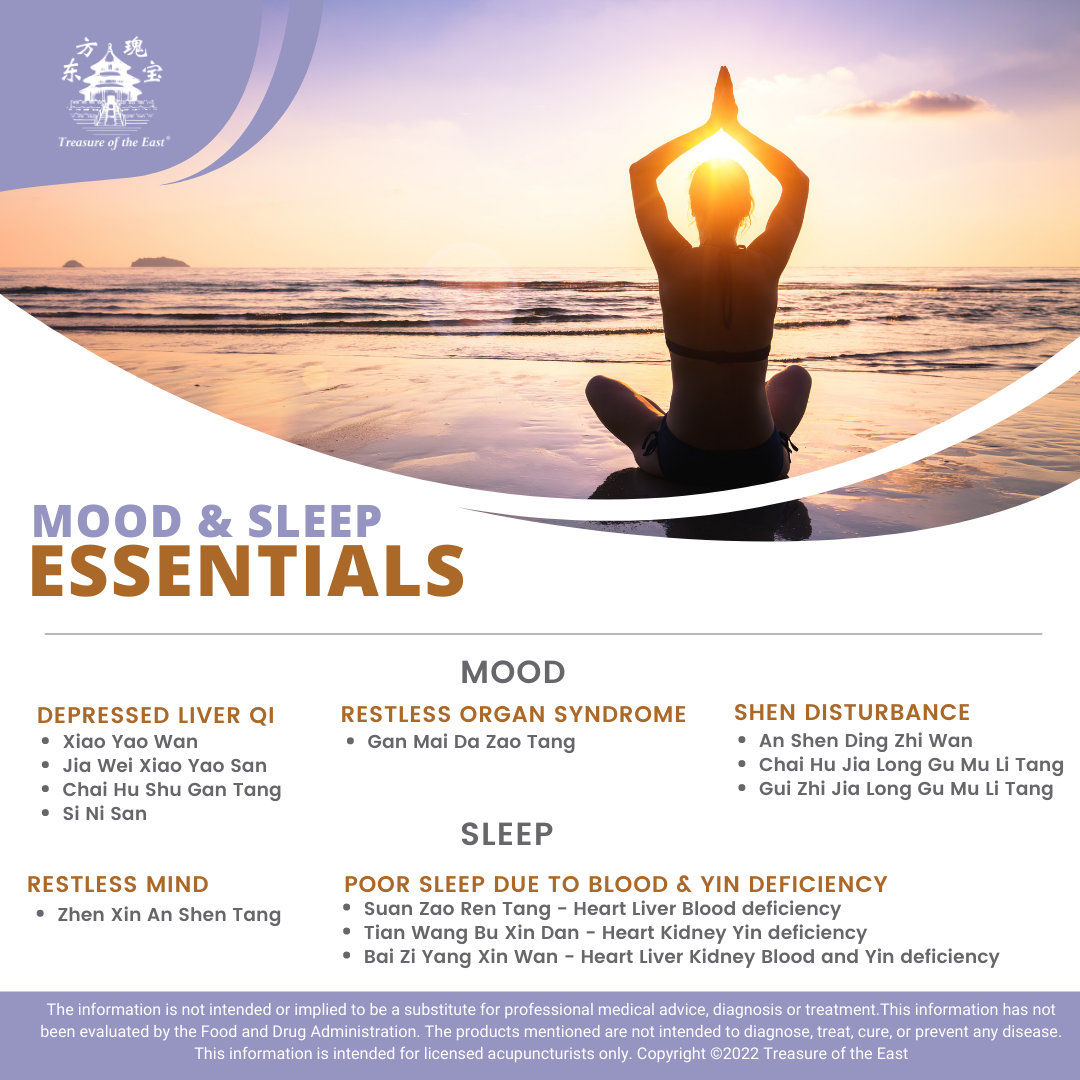
- Restless Organ Syndrome
Dosage
Mix 4.5 g in hot water and drink as tea, 2-3 daily.
Also available as Capsules.
Classical source
Classical source
Gan Mai Da Zao Tang comes from Jin Gui Yao Lue (Essentials from the Golden Cabinet), the collection of Zhang Zhongjing's formulas from the end of the Eastern Han dynasty, around 200 CE. It appears in the chapter on women's miscellaneous disorders, where Zhang describes zang zao, restless organ disorder: a person given to sorrow and sudden weeping, as if moved by spirits, who yawns and stretches again and again. The name simply lists its three ingredients, all everyday foods: gan cao (licorice), xiao mai (wheat) and da zao (jujube), cooked together as a decoction, tang.
The pattern
The pattern
The pattern is restless organ disorder (zang zao): the Heart's yin and blood are too thin to anchor the spirit, and Liver qi is held tight by long worry or grief. In Chinese medicine the Heart houses the spirit, and when it is undernourished, emotion moves without a keel. Mood swings quickly, with sudden tears, sadness that is hard to explain, sighing and frequent yawning. People feel unsettled, absent-minded or easily overwhelmed, sleep restlessly, and may have palpitations. The tongue is pale or slightly red with a thin coat, and the pulse is thin and a little rapid or wiry. Stress, grief and fatigue make it worse; rest, warmth and a gentle routine help. Marked irritability with a bitter taste points to Liver fire, and agitation with a thick yellow tongue coat points to phlegm-heat, which call for different formulas.
How it works in Chinese medicine
How it works in Chinese medicine
The treatment principle is to nourish the Heart, calm the spirit and ease urgency. Wheat is the chief: sweet and slightly cool, it nourishes the Heart and quiets the mind. Licorice is the deputy: sweet and moderating, it softens the tightness that drives sudden emotion and supports the Middle. Jujube is the assistant, adding to qi and blood and easing the Spleen and Stomach. The logic follows a line in the Inner Classic: when the Liver suffers from urgency, sweetness is used to relax it. Three mild foods, taken steadily over time, settle the mind by nourishing it rather than sedating it.
Ingredients
Ingredients
- Gan Cao: Licorice root
- Fu Xiao Mai: Light wheat grain
- Da Zao: Jujube fruit (Chinese red date)
Three plant ingredients, with no animal or mineral substances. One of them is wheat, and the Treasure of the East labels state the product contains wheat and gluten, so it is not suitable for anyone with celiac disease.
How to use
How to use
The granules are a 5:1 full-spectrum water extract, 100 g per bottle, mixed into hot water and drunk as a tea. Mix 4.5 g in hot water and drink as tea, 2-3 daily, or as directed by your practitioner.
If you are pregnant, nursing, taking medication or managing a health condition, speak with your practitioner before use. Educational information only; these statements have not been evaluated by the FDA and this product is not intended to diagnose, treat, cure or prevent any disease.
In biomedical terms
In biomedical terms
In TCM terms this is a spirit without enough nourishment to hold steady under strain. Research interprets the pattern mainly as stress-driven nitric oxide in the brain's mood centres. In studies, chronic stress raised the nerve form of nitric oxide synthase in the hippocampus within days and impaired the birth of new nerve cells, and blocking or removing the enzyme prevented and reversed the depression-like changes [1]. A study using a modified version of Gan Mai Da Zao Tang found a rapid antidepressant-like effect that depended on suppressing NMDA, nitric oxide and cGMP signalling [2]. Hydrogen sulfide works the other way: after sleep loss, a hydrogen sulfide donor relieved anxiety-like behaviour and lowered inflammatory cytokines in the hippocampus [3].
On the formula side, in studies Gan Mai Da Zao Tang eased depression-like behaviour after chronic stress, shifted the gut flora and the metabolites in stool and blood, lowered inflammatory cytokines and NLRP3 inflammasome activity in body and brain, and raised the blood-brain barrier proteins occludin and claudin-5 [4]. In anxiety tests its calming effect resembled that of diazepam and buspirone, depended on GABA-A and serotonin 1A receptors, and did not slow movement or coordination [5]. Among its ingredients, a licorice polysaccharide raised Ligilactobacillus, Alistipes and Muribaculaceae, lowered Proteobacteria and raised short-chain fatty acids [6], and jujube polyphenols lowered Proteobacteria and raised the protective mucins 2 and 3 [7].
Clinical research
Clinical research
A meta-analysis of ten randomised trials in depression found that Gan Mai Da Zao Tang gave a higher response rate than antidepressants in five trials, and that adding it to antidepressants lowered end-point depression scores in the other five. Adverse events were less common with the formula than with antidepressants [8]. In a randomised trial of 89 healthy adults in Brazil, three weeks of the formula lowered stress symptom scores compared with no treatment [9]. In a hospital series, six children with night crying or sleep-related arousal episodes had fewer episodes from the start of treatment with the formula [10].
Questions and answers
Questions and answers
What is Gan Mai Da Zao Tang used for in Chinese medicine?
Gan Mai Da Zao Tang is a classical formula traditionally used for restless organ disorder (zang zao): quick swings of mood, sudden tears, unexplained sadness, sighing, frequent yawning and restless sleep, when long worry or grief has left the Heart undernourished. Its three ingredients, wheat, licorice and jujube, are mild foods that nourish the Heart and calm the spirit. A practitioner usually confirms the pattern before recommending it.
What pattern is Gan Mai Da Zao Tang for?
Restless organ disorder (zang zao): the Heart's yin and blood are too thin to anchor the spirit, and Liver qi is held tight by strain. Typical signs are a pale or slightly red tongue with a thin coat and a thin, slightly rapid or wiry pulse. Marked irritability with a bitter taste, or agitation with a thick yellow tongue coat, point to heat or phlegm patterns that need other formulas.
How does Gan Mai Da Zao Tang work?
In Chinese medicine terms, wheat nourishes the Heart and quiets the mind, licorice softens the urgency behind sudden emotion, and jujube supports qi and blood, following the classical idea that sweetness relaxes the Liver. In biomedical terms, research interprets the pattern as stress-driven nitric oxide in the brain [1]. In studies, the formula lowered inflammatory signalling in body and brain and shifted the gut flora [4], and its calming effect depended on GABA-A and serotonin receptors [5].
How is Gan Mai Da Zao Tang different from other calming formulas?
It is the gentlest of the Heart-calming formulas: three foods aimed at emotional lability, with tears, sighing and yawning, rather than at sleep alone. Formulas with heavy minerals, such as Zhen Xin An Shen Tang, settle a spirit that will not stay down at night. Tian Wang Bu Xin Dan cools yin deficiency heat. Practitioners often add Gan Mai Da Zao Tang to another formula when mood swings are prominent.
What is the difference between Gan Mai Da Zao Tang capsules and granules?
Both are 5:1 full-spectrum water extracts of the same three ingredients from the same maker. The granules dissolve in hot water and are drunk as a tea, which makes the amount easy for a practitioner to adjust. The capsules hold the same kind of extract in a portable, tasteless form. Both labels state the product contains wheat and gluten, so neither is suitable for anyone with celiac disease.
Who should not take Gan Mai Da Zao Tang?
It is not suitable for anyone with celiac disease, since one of its three ingredients is wheat and the label states it contains wheat and gluten. Check with a practitioner first if you are pregnant or breastfeeding or take regular medication. Traditionally it is used cautiously when there is bloating, fluid retention or a thick greasy tongue coat, since its sweet ingredients can add to damp.
References
References
- Zhou QG et al. (2007). Neuronal nitric oxide synthase contributes to chronic stress-induced depression by suppressing hippocampal neurogenesis. J Neurochem. PubMed
- Zhang H et al. (2020). Yueju-Ganmaidazao Decoction confers rapid antidepressant-like effects and the involvement of suppression of NMDA/NO/cGMP signaling. J Ethnopharmacol. PubMed
- Kang X et al. (2021). Hydrogen sulfide antagonizes sleep deprivation-induced depression- and anxiety-like behaviors by inhibiting neuroinflammation in a hippocampal Sirt1-dependent manner. Brain Res Bull. PubMed
- Zhang B et al. (2025). Gan-Mai-Da-Zao decoction ameliorates depressive-like behaviors in CUMS mice via the microbiota-metabolism-inflammation axis. Phytomedicine. PubMed
- Chen HS et al. (2018). GABA and 5-HT Systems Are Involved in the Anxiolytic Effect of Gan-Mai-Da-Zao Decoction. Front Neurosci. PubMed
- Song W et al. (2023). Modulating the gut microbiota is involved in the effect of low-molecular-weight Glycyrrhiza polysaccharide on immune function. Gut Microbes. PubMed
- Wei X et al. (2024). Polyphenol Extracts from Ziziphus jujuba Mill. "Junzao" Attenuates Ulcerative Colitis by Inhibiting the NLRP3 and MAPKs Signaling Pathways and Regulating Gut Microbiota Homeostasis in Mice. Mol Nutr Food Res. PubMed
- Yeung WF et al. (2014). A meta-analysis of the efficacy and safety of traditional Chinese medicine formula Ganmai Dazao decoction for depression. J Ethnopharmacol. PubMed
- Kurebayashi LF et al. (2016). Chinese phytotherapy to reduce stress, anxiety and improve quality of life: randomized controlled trial. Rev Esc Enferm USP. PubMed
- Kawashima N (2021). Kambakutaisoto Treatment for Children With Night Crying and Arousal Parasomnias Developed During Prolonged Hospitalization for Hematological and Oncological Diseases. J Child Neurol. PubMed
Share