Treasure of the East
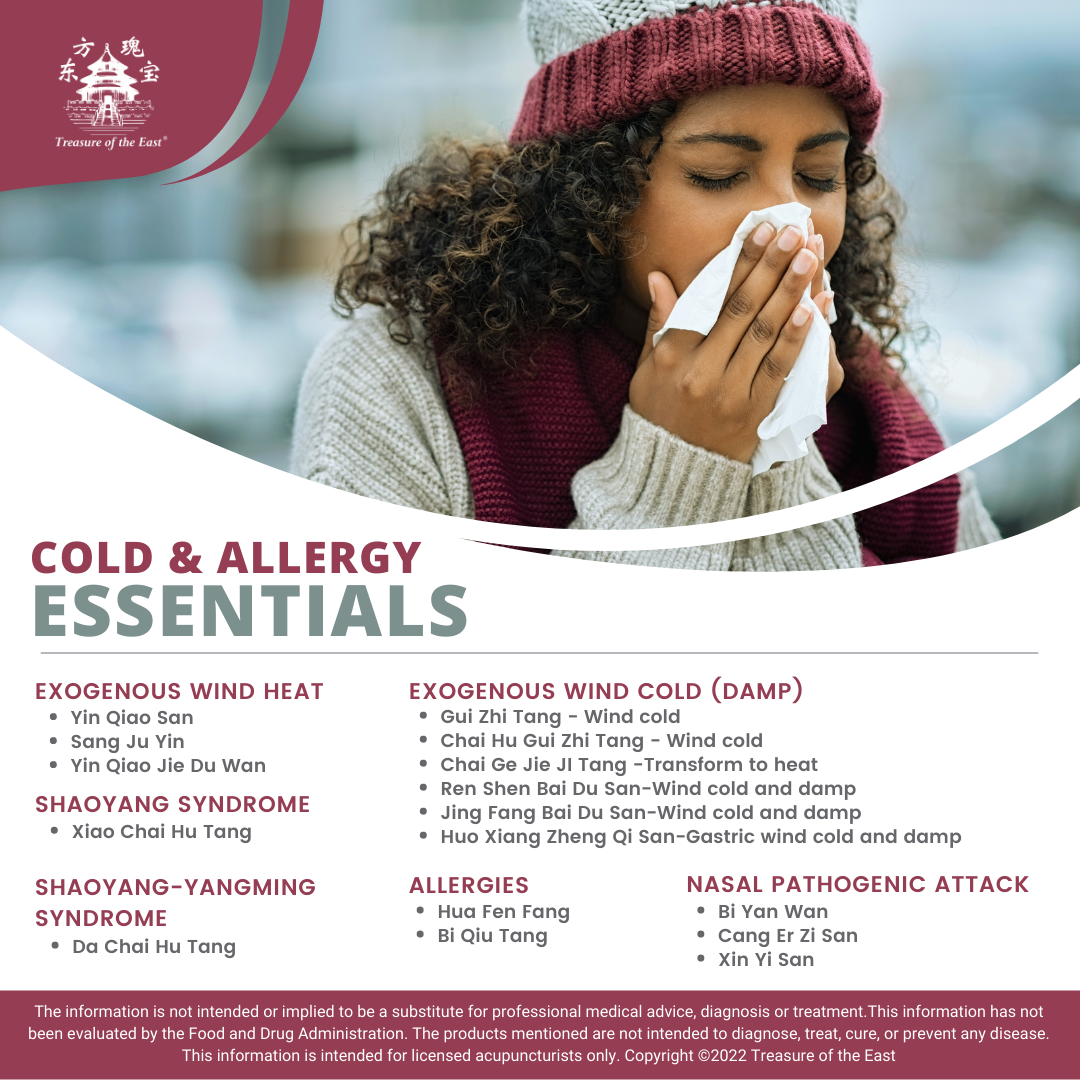
Chai Hu Gui Zhi Tang - 柴胡桂枝汤 – Bupleurum & Cinnamon Twig Decoction (Granules)
Chai Hu Gui Zhi Tang - 柴胡桂枝汤 – Bupleurum & Cinnamon Twig Decoction (Granules)
Couldn't load pickup availability
Not sure this is your formula?
Most people who search a formula name are guessing. Chorus Premium pairs you with a team of Chinese medicine practitioners and a PhD pharmacologist who match the formula to you, check it against your medications, and adjust it as you change.
Full-spectrum, water-based herbal extract; concentrated 5:1 granules (100g/bottle).
Chinese Name: 柴胡桂枝汤, Chai Hu Gui Zhi Tang
English Name: Bupleurum & Cinnamon Twig Decoction
Item Number: C012
Formula Principles:
- Releases the Exterior and muscle layer
- Harmonizes and releases the Shao-Yang
- Harmonizes the Liver, Spleen and Intestines
- Dispels Water
Ingredients:
| Chai Hu | Bupleurum Root |
| Huang Qin | Chinese Skullcap |
| Bai Shen | Ginseng Root |
| Gui Zhi | Cinnamon Twig |
| Bai Shao | White Peony Root |
| Sheng Jiang | Ginger |
| Ban Xia (Jiang) |
Pinellia Rhizome (Ginger Processed) |
| Gan Cao | Licorice Root |
| Da Zao | Jujube Fruit |
TCM Pattern
- Shao-Yang stage disorders
- Liver and Spleen disharmony
Dosage
Mix 4.5 g in hot water and drink as tea, 2-3 daily.
*The information provided here is for healthcare professional practitioners only. These statements have not been evaluated by the Food and Drug Administration. This product is not intended to diagnose, treat, cure or prevent any disease.
Classical source
Classical source
Chai Hu Gui Zhi Tang comes from the Shang Han Lun (Treatise on Cold Damage) by Zhang Zhongjing, written at the end of the Eastern Han dynasty, around 200 to 220 CE. Clause 146 describes an illness six or seven days old with fever, slight aversion to cold, nagging pain in the joints of the limbs, slight retching and a propping fullness below the heart, while the outer signs have not yet cleared. The formula joins half a dose of Xiao Chai Hu Tang to half a dose of Gui Zhi Tang. Its name lists its two lead herbs, bupleurum (chai hu) and cinnamon twig (gui zhi); tang means decoction.
The pattern
The pattern
The pattern is Taiyang and Shaoyang disease together (tai yang shao yang bing bing). In Chinese medicine an illness that has not cleared from the surface (Taiyang) has also lodged at the pivot between surface and interior (Shaoyang). People feel half-ill and achy at once: chills and heat that come and go, a mild fever with some sweating, a dislike of wind, aching joints and muscles, slight nausea, poor appetite and a full, tight feeling below the breastbone. It often follows a cold that never fully resolved, and it tends to return when the person is run down. The tongue has a thin white coat; the pulse is floating and wiry. Strong chills with no sweating, or high fever with thirst and constipation, point to different patterns.
How it works in Chinese medicine
How it works in Chinese medicine
The treatment principle is to harmonise the Shaoyang and release the exterior together. Bupleurum and skullcap open the pivot and clear the heat that gathers there, the core of Xiao Chai Hu Tang. Cinnamon twig and white peony, the core of Gui Zhi Tang, regulate the defensive and nutritive layers of the surface, so the skin and muscles can let the lingering pathogen out. Pinellia and fresh ginger settle the stomach and stop the nausea. Ginseng, jujube and licorice support the middle so the body can finish the job. At Chorus, the Xiao Chai Hu Tang family is used because it harmonises interior and exterior via the Shaoyang pivot, and this member adds the surface. In biomedical terms, this is interpreted as bringing immune signalling at the body's surfaces back into step with the stress and digestive responses inside.
Ingredients
Ingredients
- Chai Hu: Bupleurum root
- Huang Qin: Baical skullcap root
- Bai Shen: Asian ginseng root, white
- Gui Zhi: Cinnamon twig
- Bai Shao: White peony root
- Sheng Jiang: Fresh ginger rhizome
- Ban Xia (jiang): Pinellia rhizome, ginger-processed
- Gan Cao: Licorice root
- Da Zao: Jujube fruit (Chinese red date)
Nine plant ingredients, with no animal or mineral substances. The pinellia is ginger-processed, and the ginseng is listed on the label as Bai Shen, white (sun-dried) Asian ginseng. The label describes the product as a full-spectrum 5:1 water extract in granules, 100 g per bottle.
How to use
How to use
The granules are a full-spectrum 5:1 water extract, 100 g per bottle, mixed into hot water and drunk as a tea. The label reads: "Mix 4.5 g in hot water and drink as tea, 2-3 daily", or as directed by your practitioner.
If you are pregnant, nursing, taking medication or managing a health condition, speak with your practitioner before use. Educational information only; these statements have not been evaluated by the FDA and this product is not intended to diagnose, treat, cure or prevent any disease.
In biomedical terms
In biomedical terms
In TCM terms the illness is caught in two places at once: on the surface, where it causes aches and sweating, and at the pivot, where it causes chills and heat, nausea and fullness. Research interprets the pattern as nitric oxide signalling out of step between these places. For chills and heat that come and go: during colds the airway lining switches on the immune form of nitric oxide synthase [1], while in studies nitric oxide in the brain's temperature centre triggered heat loss and blunted a prostaglandin fever [2]. For the sweaty, wind-averse surface: under heat stress, blocking nitric oxide in the skin cut the active widening of skin vessels by about a third [3], and nitric oxide synthase supports both sweating and skin blood flow [4]. For an illness that returns when the person is run down: research on herpes simplex describes how stress lets a virus lying dormant in nerve cells become active again [5].
On the formula side, in a placebo-controlled trial, four weeks of Chai Hu Gui Zhi granules improved markers of blood vessel lining function, including nitric oxide, the enzyme that makes it (eNOS) and its natural blocker ADMA [6]. Among its herbs, skullcap extract was active against non-growing forms of Borrelia burgdorferi [7]. A bupleurum saponin reached the blood in its converted forms only when gut bacteria were present [8]. Baicalin from skullcap restored butyrate and lowered endotoxin-bearing Proteobacteria [9]. A water extract of cinnamon, from the same plant as cinnamon twig, raised gut diversity and Bifidobacterium longum in a placebo-controlled trial of 70 adults [10], and paeoniflorin, the main compound of white peony, raised Lactobacillus and Bifidobacterium [11].
Clinical research
Clinical research
In a randomised, double-blind, placebo-controlled trial of 90 people with stable angina, four weeks of Chai Hu Gui Zhi granules added to usual treatment improved angina, the number able to stop nitroglycerin, quality-of-life scores and blood vessel lining function more than placebo [6]. In Korea the formula is known as Sihogyeji-tang: a meta-analysis of 12 randomised trials in 805 people with functional dyspepsia found a higher response rate and greater symptom relief than with prokinetic drugs, with fewer adverse events [12]. A study using a modified version has also shown benefit: in a randomised trial of 40 people with SAPHO syndrome, which combines joint and bone inflammation with skin changes, 12 weeks of a modified version eased pain and disease activity scores more than alendronate [13].
Questions and answers
Questions and answers
What is Chai Hu Gui Zhi Tang used for in Chinese medicine?
Chai Hu Gui Zhi Tang is a classical formula traditionally used when an illness has stuck both at the surface and at the Shaoyang pivot: chills and heat that come and go, mild fever with sweating, aching joints and muscles, slight nausea and fullness below the breastbone. It combines Xiao Chai Hu Tang with Gui Zhi Tang. In biomedical terms, research interprets the pattern through nitric oxide signalling in the airways and the brain's temperature centre [1] [2].
What pattern is Chai Hu Gui Zhi Tang for?
Taiyang and Shaoyang disease together. The Taiyang part shows as a dislike of wind, sweating and body aches; the Shaoyang part as alternating chills and heat, poor appetite, nausea and fullness under the ribs. The tongue coat is thin and white and the pulse floating and wiry. Strong chills without sweating, or high fever with thirst and constipation, point to a different pattern.
How does Chai Hu Gui Zhi Tang work?
In Chinese medicine terms, bupleurum and skullcap release the Shaoyang pivot, cinnamon twig and white peony regulate the surface, and pinellia, ginger, ginseng, jujube and licorice settle and support the middle. In biomedical terms, the pattern is interpreted as nitric oxide signalling out of step between the skin, the airways and the brain's temperature centre [1] [2] [3]. In a placebo-controlled trial, the granules improved nitric oxide and other markers of blood vessel lining function [6].
What form does Chai Hu Gui Zhi Tang come in?
Chorus carries it as granules: a full-spectrum 5:1 water extract of nine herbs, 100 g per bottle, that dissolves in hot water and is drunk as a tea. Granules make it easy for a practitioner to adjust the amount or to combine the formula with another. Follow the label or your practitioner for how much to take.
Who should not take Chai Hu Gui Zhi Tang?
Check with a practitioner first if you are pregnant or breastfeeding or take prescription medication. Traditionally the formula is not used when there is high fever with thirst and constipation, when the person is deeply cold and exhausted, or when dryness and heat from depleted yin are present. A practitioner can also judge whether an illness needs conventional medical care first.
How long does Chai Hu Gui Zhi Tang take to work?
In Chinese medicine, a harmonising formula like this is judged by whether the chills, aches and nausea settle, and practitioners usually review it after a week or two. When the pattern lingers or keeps returning, it may be used for longer with regular reviews. If nothing has shifted, it is worth asking whether the pattern was the right match.
References
References
- Sanders SP et al. (2001). Rhinovirus infection induces expression of type 2 nitric oxide synthase in human respiratory epithelial cells in vitro and in vivo. J Allergy Clin Immunol. PubMed
- Osaka T (2010). Nitric oxide mediates noradrenaline-induced hypothermic responses and opposes prostaglandin E2-induced fever in the rostromedial preoptic area. Neuroscience. PubMed
- Kellogg DL Jr et al. (1998). Nitric oxide and cutaneous active vasodilation during heat stress in humans. J Appl Physiol (1985). PubMed
- Louie JC et al. (2016). The interactive contributions of Na(+) /K(+) -ATPase and nitric oxide synthase to sweating and cutaneous vasodilatation during exercise in the heat. J Physiol. PubMed
- Yan C et al. (2020). Disturbed Yin-Yang balance: stress increases the susceptibility to primary and recurrent infections of herpes simplex virus type 1. Acta Pharm Sin B. PubMed
- Cao Y et al. (2025). Effect of Chaihu Guizhi granules on clinical parameters and vascular endothelial function in patients with stable angina pectoris: A randomized, double-blind, placebo-controlled trial. Medicine (Baltimore). PubMed
- Feng J et al. (2020). Evaluation of Natural and Botanical Medicines for Activity Against Growing and Non-growing Forms of B. burgdorferi. Front Med (Lausanne). PubMed
- Kida H et al. (1998). Metabolism and pharmacokinetics of orally administered saikosaponin b1 in conventional, germ-free and Eubacterium sp. A-44-infected gnotobiote rats. Biol Pharm Bull. PubMed
- Zhu L et al. (2020). Protective effect of baicalin on the regulation of Treg/Th17 balance, gut microbiota and short-chain fatty acids in rats with ulcerative colitis. Appl Microbiol Biotechnol. PubMed
- Park SY et al. (2023). Cinnamon (Cinnamomum cassia) water extract improves diarrhea symptoms by changing the gut environment: a randomized controlled trial. Food Funct. PubMed
- Xia M et al. (2025). Paeoniflorin improves atherosclerosis by regulating the gut microbiota and fecal metabolites. mSystems. PubMed
- Bae H et al. (2025). Effect of Sihogyeji-tang on functional dyspepsia: a systematic review and meta-analysis. Front Pharmacol. PubMed
- Li C et al. (2017). [Clinical Observation of Chaihu Guizhi Decoction in Treating SAPHO Syndrome]. Zhongguo Zhong Xi Yi Jie He Za Zhi. PubMed
Share