Treasure of the East
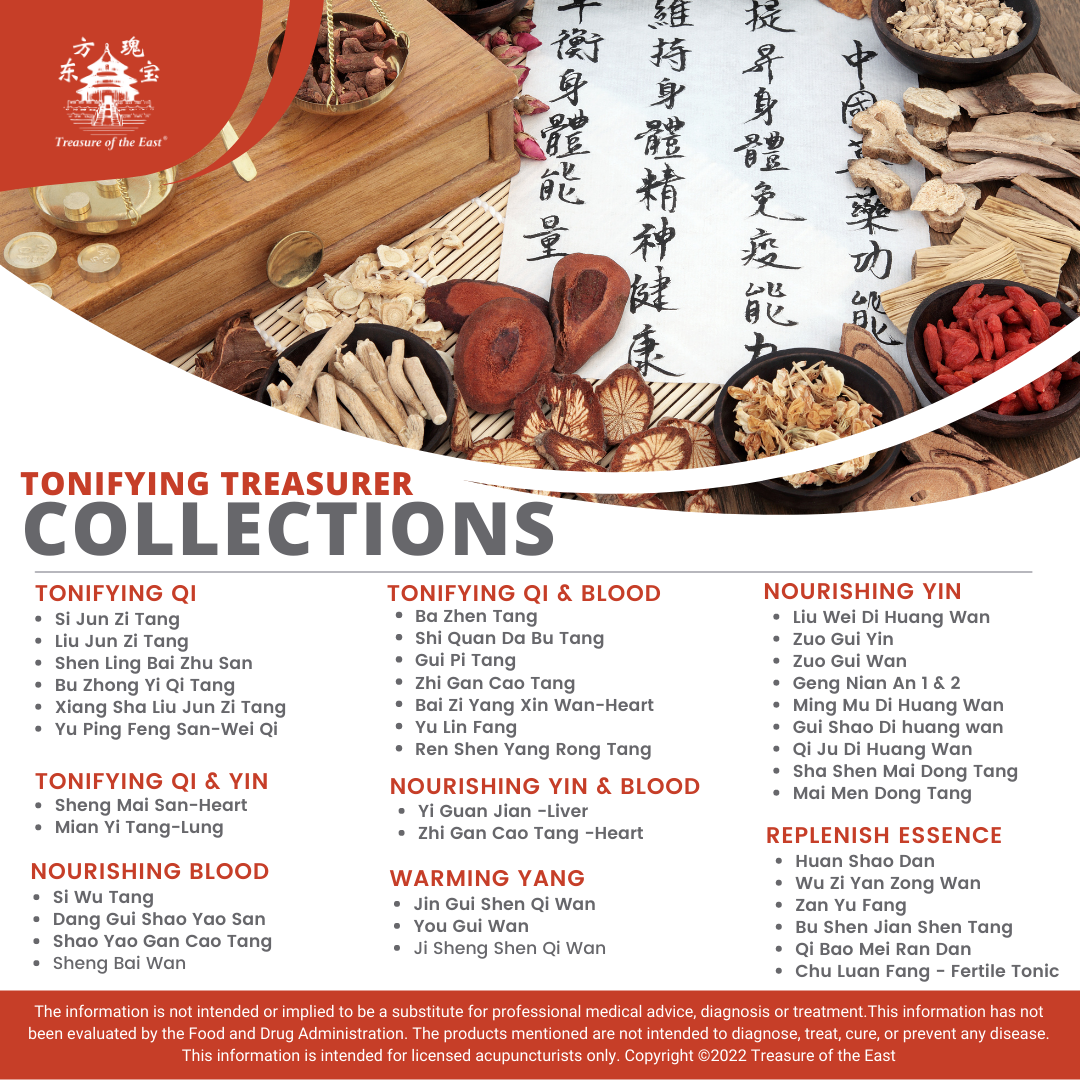
Shi Quan Da Bu Tang - 十全大补汤 - Ginseng & Dang Gui Ten Combination (Granules)
Shi Quan Da Bu Tang - 十全大补汤 - Ginseng & Dang Gui Ten Combination (Granules)
Couldn't load pickup availability
Not sure this is your formula?
Most people who search a formula name are guessing. Chorus Premium pairs you with a team of Chinese medicine practitioners and a PhD pharmacologist who match the formula to you, check it against your medications, and adjust it as you change.
Full-spectrum, water-based herbal extract; concentrated 5:1 granules (100g/bottle).
Item Number: S115
Chinese Name: 十全大补汤, Shi Quan Da Bu Tang
English Name: Ginseng & Dang Gui Ten Combination
Formula Principles:
Replenishes Yang, warms and tonifies Qi and blood
Ingredients:
| Bai Zhu (Chao) |
White Atractylodes Rhizome (Processed)* |
| Fu Ling | Poria |
| Gan Cao (Mi) | Licorice Root (Processed) |
| Dang Gui | Chinese Angelica Root |
| Dang Shen | Codonopsis Root |
| Chuan Xiong | Chuanxiong Rhizome |
| Bai Shao (Chao) | White Peony Root (Processed) |
| Shu Di Huang | Rehmannia Root (Processed) |
| Huang Qi (Mi) | Astragalus Root (Processed) |
| Rou Gui | Cassia Bark |
Allergen: Processed with Wheat *
TCM Pattern:
Qi, blood and Yang deficiency with cold, fatigue due to Qi, blood deficiency
Dosage:
Mix 4.5 g in hot water and drink as tea, 2-3 daily.
Also available as Capsules.
Classical source
Classical source
Shi Quan Da Bu Tang is recorded in Tai Ping Hui Min He Ji Ju Fang (Formulary of the Imperial Pharmacy for Benefiting the People in the Taiping Era), the formulary of the Song dynasty imperial pharmacy, revised several times in the twelfth century. It was given to people worn down by long illness or overwork, whose qi and blood were both spent and who had begun to feel the cold: tiredness, poor appetite, a pale face, cold limbs and slow recovery. In structure it is the eight herbs of Ba Zhen Tang with astragalus and cinnamon bark added. Shi quan means complete in ten, and da bu means great tonifying.
The pattern
The pattern
The pattern is qi and blood dual deficiency with cold, as yang begins to weaken. In Chinese medicine qi and blood feed each other, and when both run low for long, the body's warmth, its yang, starts to fade too. People are tired to the bone, breathless on small efforts and slow to recover from illness, surgery or a hard season. The face is pale or sallow, the hands and feet are cold, and they feel the cold more than others. Appetite is poor, cuts and sores heal slowly, and periods may be light and pale. The tongue is pale and moist and the pulse is thin, weak and slow. Warmth, rest and food help. Signs of heat, such as a red tongue, night sweats or thirst, point to a different pattern.
How it works in Chinese medicine
How it works in Chinese medicine
The treatment principle is to warm and greatly tonify qi and blood. Codonopsis and prepared rehmannia are the chiefs: one builds qi, the other nourishes blood. Astragalus and white atractylodes strengthen the Spleen and lift qi, while Chinese angelica adds to blood. White peony root and chuanxiong keep the blood both nourished and moving, and poria drains damp so the Spleen can work. Cinnamon bark is what sets this formula apart from simpler qi and blood tonics: it warms the yang and is said to help qi turn into blood. Honey-fried licorice harmonises the formula and adds to Spleen qi. The logic is that warmth restores the body's ability to make new qi and blood, so the tonics can take hold.
Ingredients
Ingredients
- Bai Zhu (chao): White atractylodes rhizome, processed
- Fu Ling: Poria
- Gan Cao (mi): Licorice root, honey-fried
- Dang Gui: Chinese angelica root
- Dang Shen: Codonopsis root
- Chuan Xiong: Chuanxiong rhizome
- Bai Shao (chao): White peony root, processed
- Shu Di Huang: Rehmannia root, prepared
- Huang Qi (mi): Astragalus root, honey-fried
- Rou Gui: Cassia (Chinese cinnamon) bark
Ten plant ingredients, with no animal or mineral substances. It contains honey-fried licorice root, and the astragalus is also honey-fried. The Treasure of the East labels state the product is processed with wheat, so it is not suitable for anyone with celiac disease.
How to use
How to use
The granules are a 5:1 full-spectrum, water-based extract, 100 g per bottle. Mix 4.5 g in hot water and drink as tea, 2-3 daily, or as directed by your practitioner.
Also made as capsules, for the same formula in a different form.
If you are pregnant, nursing, taking medication or managing a health condition, speak with your practitioner before use. Educational information only; these statements have not been evaluated by the FDA and this product is not intended to diagnose, treat, cure or prevent any disease.
In biomedical terms
In biomedical terms
In TCM terms this is depletion with cold: too little qi and blood, and too little warmth to make more. Research interprets the qi side as weak on-demand widening of blood vessels, which depends on nitric oxide: people with ME/CFS had markedly lower flow-mediated dilation and weaker small-vessel responses than healthy controls [1]. For the cold side, studies of the cold-deficiency pattern found lower activity of energy-producing enzymes and lower thyroid hormone (T3) [2]. Research interprets constant cold intolerance as low gas signalling to brown fat, the tissue that makes heat: hydrogen sulfide is needed for brown fat to raise heat production in the cold [3], and protein kinase G, which carries the nitric oxide signal, is needed for brown fat cells to form, build mitochondria and make the heat protein UCP-1 [4].
On the formula side, a study found Shi Quan Da Bu Tang raised the gut bacterium Lactobacillus johnsonii, and its effects on gene activity in the gut and liver appeared only when gut bacteria were present [5]. In another study it shifted gut bacteria and their metabolites alongside a stronger T-cell response [6]. Cinnamaldehyde from cinnamon bark also raised Lactobacillus johnsonii [7], and in a placebo-controlled trial of 70 adults with diarrhoea, cassia bark extract raised gut bacterial diversity and a Bifidobacterium longum strain [8]. Astragalus raised bacteria that make short-chain fatty acids, with more acetate, propionate and butyrate [9], and catalpol from rehmannia rebalanced gut bacteria and raised erythropoietin in studies of blood deficiency [10].
Clinical research
Clinical research
A meta-analysis of 11 studies in 754 people with cancer-related fatigue found that Shi Quan Da Bu Tang reduced fatigue and improved quality of life compared with control groups, both alongside other treatment and on its own, with no serious adverse events [11]. In a double-blind, placebo-controlled trial of 50 people with cancer-related fatigue, three weeks of the formula improved fatigue scores and the global health measure of quality of life more than placebo [12].
Questions and answers
Questions and answers
What is Shi Quan Da Bu Tang used for in Chinese medicine?
Shi Quan Da Bu Tang is a classical formula traditionally used when qi and blood are both depleted and warmth has begun to fade: deep tiredness, breathlessness on effort, a pale face, cold hands and feet, poor appetite and slow recovery after illness or a hard period. It warms and builds qi and blood together. A practitioner usually confirms the pattern before recommending it.
What pattern is Shi Quan Da Bu Tang for?
Qi and blood dual deficiency with cold, as yang begins to weaken. Typical signs are a pale, moist tongue and a thin, weak, slow pulse, with a clear dislike of cold. When pallor and tiredness come without the cold, the simpler Ba Zhen Tang picture may fit better. A red tongue, night sweats or thirst point to a different pattern.
How does Shi Quan Da Bu Tang work?
In Chinese medicine terms, codonopsis, astragalus and white atractylodes build qi, prepared rehmannia, Chinese angelica and white peony nourish blood, and cinnamon bark warms the yang so that new qi and blood can be made. In biomedical terms, research links the pattern's cold to gas signalling in brown fat, which needs hydrogen sulfide to make heat [3]. In studies, the formula raised the gut bacterium Lactobacillus johnsonii, and some of its effects depended on gut bacteria [5].
What is the difference between Shi Quan Da Bu Tang capsules and granules?
Both are 5:1 full-spectrum water extracts of the same ten herbs from the same maker. The granules dissolve in hot water and are drunk as a tea, which makes the amount easy for a practitioner to adjust. The capsules hold the same kind of extract in a portable, tasteless form. Both labels state the product is processed with wheat, so neither is suitable for anyone with celiac disease. Follow the label or your practitioner for how much to take.
Who should not take Shi Quan Da Bu Tang?
Check with a practitioner first if you are pregnant or breastfeeding or take regular medication. It is not suitable for anyone with celiac disease, since the label states the product is processed with wheat. Traditionally this warming formula is not used during a cold or fever, or when there are signs of heat such as a red tongue, thirst or night sweats.
How long does Shi Quan Da Bu Tang take to work?
In Chinese medicine, qi and blood are rebuilt slowly, so practitioners usually judge a warming tonic like this over weeks rather than days, and often see energy, appetite and warmth in the hands and feet change first. If nothing has shifted after several weeks, it is worth asking whether the pattern was the right match.
References
References
- Sandvik MK et al. (2023). Endothelial dysfunction in ME/CFS patients. PLoS One. PubMed
- Han XY et al. (2018). Regulatory effects of Poria on substance and energy metabolism in cold-deficiency syndrome compared with heat-deficiency syndrome in rats. Chin J Nat Med. PubMed
- Soriano RN et al. (2018). Endogenous peripheral hydrogen sulfide is propyretic: its permissive role in brown adipose tissue thermogenesis in rats. Exp Physiol. PubMed
- Haas B et al. (2009). Protein kinase G controls brown fat cell differentiation and mitochondrial biogenesis. Sci Signal. PubMed
- Kato M et al. (2007). Effect of herbal medicine Juzentaihoto on hepatic and intestinal heat shock gene expression requires intestinal microflora in mouse. World J Gastroenterol. PubMed
- Yamaguchi K et al. (2026). Juzentaihoto modulates gut microbiota and potentiates the anti-tumor effect of anti-PD-1 antibody in an immunogenic mouse melanoma model. J Nat Med. PubMed
- Zhao H et al. (2021). Cinnamaldehyde Improves Metabolic Functions in Streptozotocin-Induced Diabetic Mice by Regulating Gut Microbiota. Drug Des Devel Ther. PubMed
- Park SY et al. (2023). Cinnamon (Cinnamomum cassia) water extract improves diarrhea symptoms by changing the gut environment: a randomized controlled trial. Food Funct. PubMed
- Liu W et al. (2024). Oral Astragalus polysaccharide alleviates adenine-induced kidney injury by regulating gut microbiota-short-chain fatty acids-kidney G protein-coupled receptors axis. Ren Fail. PubMed
- Zhang W et al. (2023). Serum, spleen metabolomics and gut microbiota reveals effect of catalpol on blood deficiency syndrome caused by cyclophosphamide and acetylphenylhydrazine. Front Immunol. PubMed
- Park J et al. (2025). Efficacy and safety of Sipjeondaebo-tang for cancer-related fatigue: A systematic review and meta-analysis. J Ethnopharmacol. PubMed
- Lee JY et al. (2021). Traditional Herbal Medicine, Sipjeondaebo-Tang, for Cancer-Related Fatigue: A Randomized, Placebo-Controlled, Preliminary Study. Integr Cancer Ther. PubMed
Share