


chorusforlife
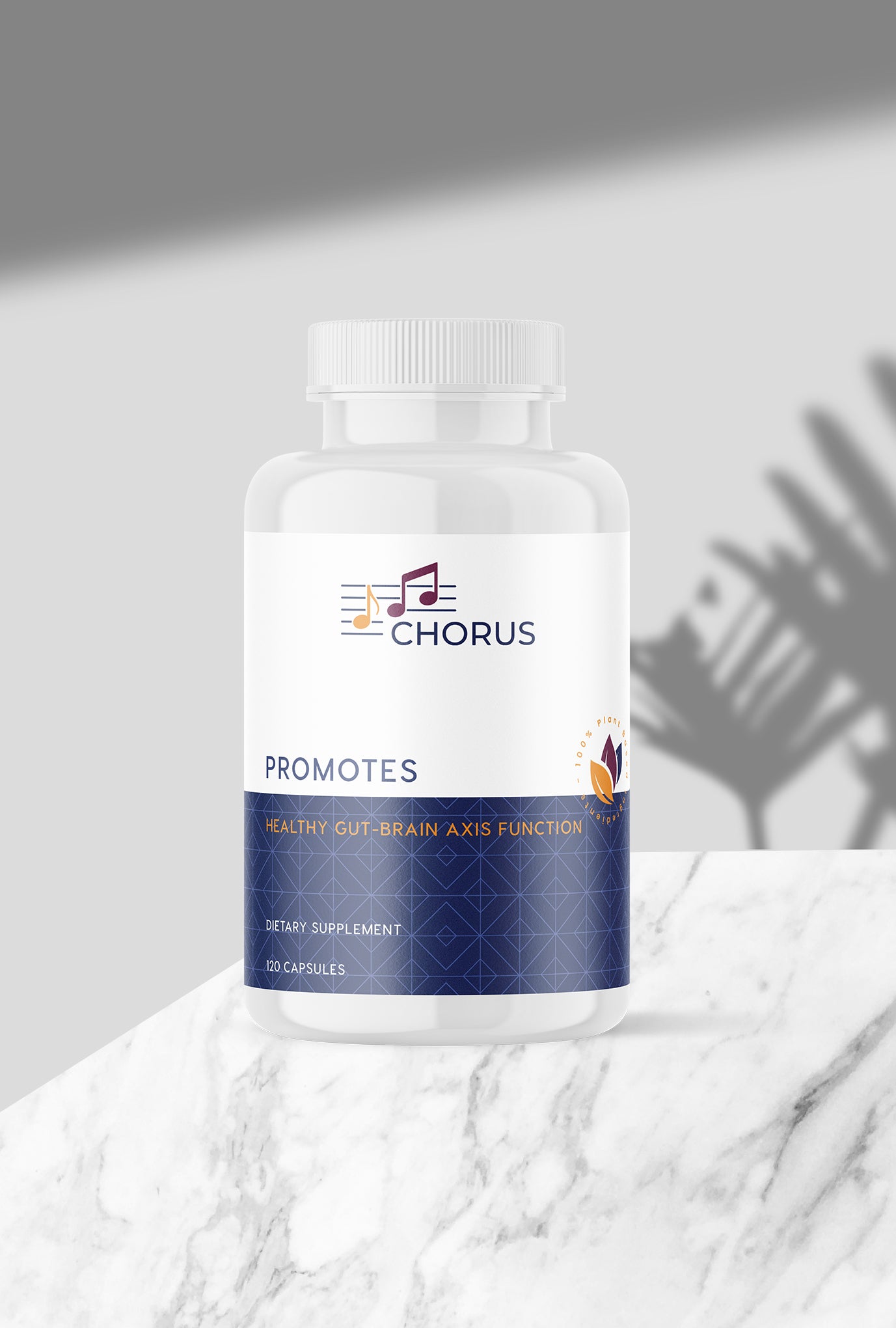
Chorus Gut Harmony (Organic)
Chorus Gut Harmony (Organic)
Couldn't load pickup availability
Practitioners: the wholesale 12-pack is here.
Not sure this is your formula?
Most people who search a formula name are guessing. Chorus Premium pairs you with a team of Chinese medicine practitioners and a PhD pharmacologist who match the formula to you, check it against your medications, and adjust it as you change.
Organic · 16 botanicals · 120 capsules
Chorus is the formula this whole village is built around — sixteen organic botanicals chosen to restore the conditions a healthy microbiome needs to grow, and with it the quiet conversation between gut and brain. People take it for digestion that has become unpredictable, for energy that runs out by mid-afternoon, and for the fog and low mood that so often travel with them.
- Seven hundred years of recorded use. A classical formula, screened against modern drug–herb interaction data so it can sit alongside essential medication.
- Purity tested. Every batch screened for 592 pesticides, heavy metals, mould toxins and microbials.
- One-month promise. If Chorus has not changed how you feel within the first month, ask for a refund.
Classical source
Classical source
Chorus Gut Harmony is Chorus for Life's own sixteen-herb organic formula, built on Bao Ji Wan (保济丸), a patent pill first made in Foshan, Guangdong, in the late Qing dynasty and traditionally used when damp unsettles the stomach and bowels. Its name means a pill that protects and relieves. Its herbs combine three Spleen and Stomach strategies. Aromatic herbs such as agastache, grey atractylodes and angelica dahurica transform damp, and bland ones such as poria and coix seed drain it. Hawthorn, medicated leaven and rice sprout reduce food that sits undigested, while costus root and pomelo peel move qi. A smaller group of kudzu root, mint, acorus, uncaria, tribulus and trichosanthes root eases tension, calms the Liver and protects fluids.
The pattern
The pattern
The pattern is cold-damp encumbering the Spleen with qi deficiency (han shi kun pi, pi qi xu). In Chorus's practice it is the root layer beneath many reactive, heavy pictures. In Chinese medicine the Spleen warms and moves what we eat. When cold and damp settle in the middle, digestion slows and ferments. The belly bloats and gurgles, nausea comes easily, appetite is poor and there is little thirst. Stools are loose and sticky. The head and limbs feel heavy, the head muzzy, and energy fades after meals. Many foods start to feel like triggers. Damp weather, musty rooms and cold or rich food make it worse; warmth helps. The tongue is pale, swollen, wet and scalloped with a thick white greasy coat. A red tongue with a yellow coat and burning, foul stools point to damp-heat instead.
How it works in Chinese medicine
How it works in Chinese medicine
The treatment principle is to transform and dry damp, restore digestion and move qi, so that a burdened Spleen can work again. Agastache, grey atractylodes and angelica dahurica are aromatic: they rouse a damp, sluggish middle and settle nausea. Poria and coix seed drain damp downward. Hawthorn, medicated leaven and rice sprout help break down rich food, starches and grains, so less sits fermenting. Costus root and pomelo peel move qi to relieve bloating. Kudzu root firms the stool, mint eases spasm, and acorus clears a clouded head. Uncaria and tribulus calm and smooth the Liver, and trichosanthes root protects fluids. The logic is to unload the Spleen first, because a Spleen freed of damp can regain its strength.
Ingredients
Ingredients
- Fu Ling — Poria: drains stagnant fluid and steadies a queasy middle
- Cang Zhu — Atractylodes: dries damp and revives a sluggish, over-full digestion
- Huo Xiang — Agastache: transforms damp and settles nausea
- Yi Yi Ren — Coix seed: quietly drains excess damp without harshness
- Bai Zhi — Angelica dahurica: opens a congested, stuffy middle
- Shan Zha — Hawthorn: helps break down fats and rich food
- Shen Qu — Medicated leaven: restarts digestion of grains and starches
- Gu Ya — Rice sprout: eases the digestion of carbohydrates
- Mu Xiang — Aucklandia: relieves the stuck, bloated feeling and regulates the intestines
- Bo He — Peppermint: relaxes gut muscle, easing cramp and spasm
- Ge Gen — Kudzu root: firms loose stools and eases the grip of a stressed gut
- Shi Chang Pu — Acorus: transforms sticky phlegm and opens the senses
- Hua Ju Hong — Pomelo peel: moves qi and cuts through greasy congestion
- Tian Hua Fen — Trichosanthes root: clears phlegm-heat while generating fluids
- Gou Teng — Uncaria: calms an overactive nervous system
- Bai Ji Li — Tribulus: moves stagnant liver qi and eases the pressure behind gut symptoms
Sixteen organic, third-party-tested botanicals. 120 capsules.
How to use
How to use
Take 2 to 4 capsules with each meal, or as directed by your practitioner. We usually suggest 6 to 12 capsules a day, split into two or three doses.
If you are pregnant or nursing, taking any medication, or managing a health condition, speak with your doctor before use. Discontinue and consult your doctor if any adverse reaction occurs. Store in a cool, dry place. These statements have not been evaluated by the FDA; this product is not intended to diagnose, treat, cure or prevent any disease.
In biomedical terms
In biomedical terms
In TCM terms cold and damp have smothered the Spleen's warmth, so food ferments instead of being transformed. Research interprets this pattern mainly as a gut that makes too much hydrogen sulfide and fermentation gas, with weak nitric oxide signalling in the stomach. A review linked stool hydrogen sulfide and related sulfur compounds with gut inflammation [1], and studies of cold-damp diarrhoea found raised inflammatory signals and a damaged colonic barrier [2]. Bloating with loose, sticky stool maps to excess hydrogen and methane, the gases breath tests measure [3]. Cold itself slows the stomach: a cold stress test slowed gastric emptying in healthy people [4]. The qi deficiency side shows as early fullness: in a placebo-controlled study in healthy people, blocking nitric oxide cut the stomach's relaxation to a meal by half or more [5].
Each finding below belongs to one of the formula's herbs. Three months of germinated brown rice, the grain behind rice sprout, raised gut diversity, Faecalibacterium and Bifidobacterium and lowered sulfate-reducing Desulfobacterota in adults with high blood lipids [6]. One week of puerarin, from kudzu root, lowered Prevotella copri and the metabolite TMAO in people with carotid plaque [7]. Cooked coix seed raised Faecalibacterium in healthy men [8]. Poria lowered the sulfide-producing bacterium Bilophila [9], as did naringin from pomelo peel [10]. Patchouli alcohol from agastache blocked the ammonia-making enzyme of Helicobacter pylori [11], and grey atractylodes oil slowed its growth [12]. Costus root raised Lactobacillus reuteri and its anti-inflammatory indole [13], and medicated leaven raised Lactobacillus in studies of Spleen deficiency [14].
Questions and answers
Questions and answers
What is Chorus Gut Harmony used for in Chinese medicine?
Chorus Gut Harmony is Chorus for Life's sixteen-herb organic formula, built on the patent formula Bao Ji Wan, for cold-damp encumbering the Spleen with qi deficiency: bloating, nausea, loose sticky stools, a heavy body and muzzy head, low appetite and energy that fades after meals. In Chorus's practice it addresses the root layer beneath many reactive, heavy pictures, by drying damp and restoring digestion. A practitioner usually confirms the pattern first.
What pattern is Chorus Gut Harmony for?
Cold-damp encumbering the Spleen with qi deficiency (han shi kun pi, pi qi xu). Cold and damp smother the Spleen's warmth, so food ferments and the body feels heavy. Typical signs are a pale, swollen, scalloped tongue with a thick white greasy coat and a soggy or slippery pulse. A red tongue with a yellow coat and burning, foul stools suggest damp-heat, a different pattern.
How does Chorus Gut Harmony work?
In Chinese medicine terms, aromatic herbs transform damp, poria and coix seed drain it, hawthorn, medicated leaven and rice sprout restore digestion, and costus and pomelo peel move qi. In biomedical terms, the pattern centres on excess hydrogen sulfide and fermentation gas [1] [3]. In studies, its herbs pushed against sulfide-producing bacteria, including poria [9] and germinated rice [6], and coix seed raised Faecalibacterium in healthy men [8].
What is in Chorus Gut Harmony?
Sixteen organic, third-party-tested botanicals: poria, grey atractylodes, agastache, coix seed, angelica dahurica, hawthorn, medicated leaven, rice sprout, costus root, peppermint, kudzu root, acorus, pomelo peel, trichosanthes root, uncaria and tribulus. They come from the Spleen and Stomach tradition of Chinese medicine: herbs that transform and drain damp, herbs that restore digestion, and herbs that move qi and calm the Liver.
Who should not take Chorus Gut Harmony?
Check with a practitioner first if you are pregnant or breastfeeding, take regular medication or manage a health condition. It is not suitable for anyone with celiac disease, since medicated leaven is traditionally made with wheat. Traditionally, a damp-drying formula is not the choice when the picture is dryness or heat: a red tongue with little coat, a dry mouth or burning, foul stools.
How long does Chorus Gut Harmony take to work?
In Chinese medicine, damp is said to clear slowly, so practitioners usually reassess a damp-drying formula over a few weeks. The first signs of change are often less bloating, firmer stools, a lighter head and a thinner tongue coat. If nothing has shifted after several weeks, it is worth asking whether the pattern was the right match.
References
References
- Walker A et al. (2021). The role of fecal sulfur metabolome in inflammatory bowel diseases. Int J Med Microbiol. PubMed
- Zhang H et al. (2026). Differentiating Damp-Heat and Cold-Damp Diarrhea in Rat Models via Gut Microbiota Dysbiosis and Short-Chain Fatty Acid Profiling. Microbiologyopen. PubMed
- Rezaie A et al. (2017). Hydrogen and Methane-Based Breath Testing in Gastrointestinal Disorders: The North American Consensus. Am J Gastroenterol. PubMed
- Fone DR et al. (1990). Gastroduodenal motility during the delayed gastric emptying induced by cold stress. Gastroenterology. PubMed
- Tack J et al. (2002). Role of nitric oxide in the gastric accommodation reflex and in meal induced satiety in humans. Gut. PubMed
- Ren C et al. (2024). Autoclaving-treated germinated brown rice relieves hyperlipidemia by modulating gut microbiota in humans. Front Nutr. PubMed
- [No authors listed] (2024). Puerarin alleviates atherosclerosis via the inhibition of Prevotella copri and its trimethylamine production. Gut. PubMed
- Jinnouchi M et al. (2021). Coix Seed Consumption Affects the Gut Microbiota and the Peripheral Lymphocyte Subset Profiles of Healthy Male Adults. Nutrients. PubMed
- Zhou X et al. (2025). Regulatory effects of Poria cocos polysaccharides on gut microbiota and metabolites: evaluation of prebiotic potential. NPJ Sci Food. PubMed
- Pan L et al. (2023). Effects of several flavonoids on human gut microbiota and its metabolism by in vitro simulated fermentation. Front Microbiol. PubMed
- Lian DW et al. (2017). [Mechanism of anti-Helicobacter pylori urease activity of patchouli alcohol]. Zhongguo Zhong Yao Za Zhi. PubMed
- Yu M et al. (2019). Atractylodes lancea volatile oils attenuated helicobacter pylori NCTC11637 growth and biofilm. Microb Pathog. PubMed
- Tang WY et al. (2026). Radix Aucklandiae inhibits M1 macrophage polarization to alleviate ulcerative colitis by modulating gut microbial production of indole-3-aldehyde. Phytomedicine. PubMed
- Guo K et al. (2025). Massa Medicata Fermentata treated spleen deficiency constipation by mediating intestinal microbiota and serum peptide. Front Cell Infect Microbiol. PubMed
Share




Limited release
Most people feel the difference by month two.
Get 3 bottles for the price of 1½.
$79.98Regular price$149.97You save $69.99
Order three bottles of Chorus Gut Harmony today, then receive one bottle a month at $49.99. Cancel any time.